

A Kansas City home has about a four-week window each fall to clear dropping leaves before the first hard freeze locks debris into the gutters. Understanding fall leaf drop in Kansas City, when it starts and how long it lasts, decides whether gutters stay clear through winter or overflow by spring. Scheduling a Gutter Cleaning around that window protects the roofline.
By The Gutter Guys Team, Gutter Installation Experts
When Does Fall Leaf Drop in Kansas City Begin?
Fall officially arrives with the autumnal equinox in late September, but Kansas City's leaf drop rarely waits for the calendar. Maple, oak, and sycamore trees across the metro start shifting color as soon as nighttime temperatures cool, often in the second or third week of September. The city's fall foliage display is one reason so many neighborhoods look their best in early October, right before the leaf drop accelerates. Homeowners in southern parts of the metro, where summer heat lingers a little longer, sometimes see the color and the drop arrive a few days behind the northern suburbs, but the season moves fast once it starts.
How Long Is the Leaf Drop Window Before Kansas City's First Hard Freeze?
Kansas City's first hard freeze typically lands sometime in late October to mid-November, which gives homeowners roughly a four-week window between peak fall color and the point where gutters need to be fully clear for winter. That window is the real deadline behind fall leaf drop in Kansas City: raking schedules and gutter cleaning should work backward from the freeze date, not from the calendar date of the first day of fall. Waiting until Thanksgiving to think about gutters usually means dealing with frozen debris instead of loose leaves.
Why Do Clogged Gutters During Leaf Season Cause Winter Ice Dams?
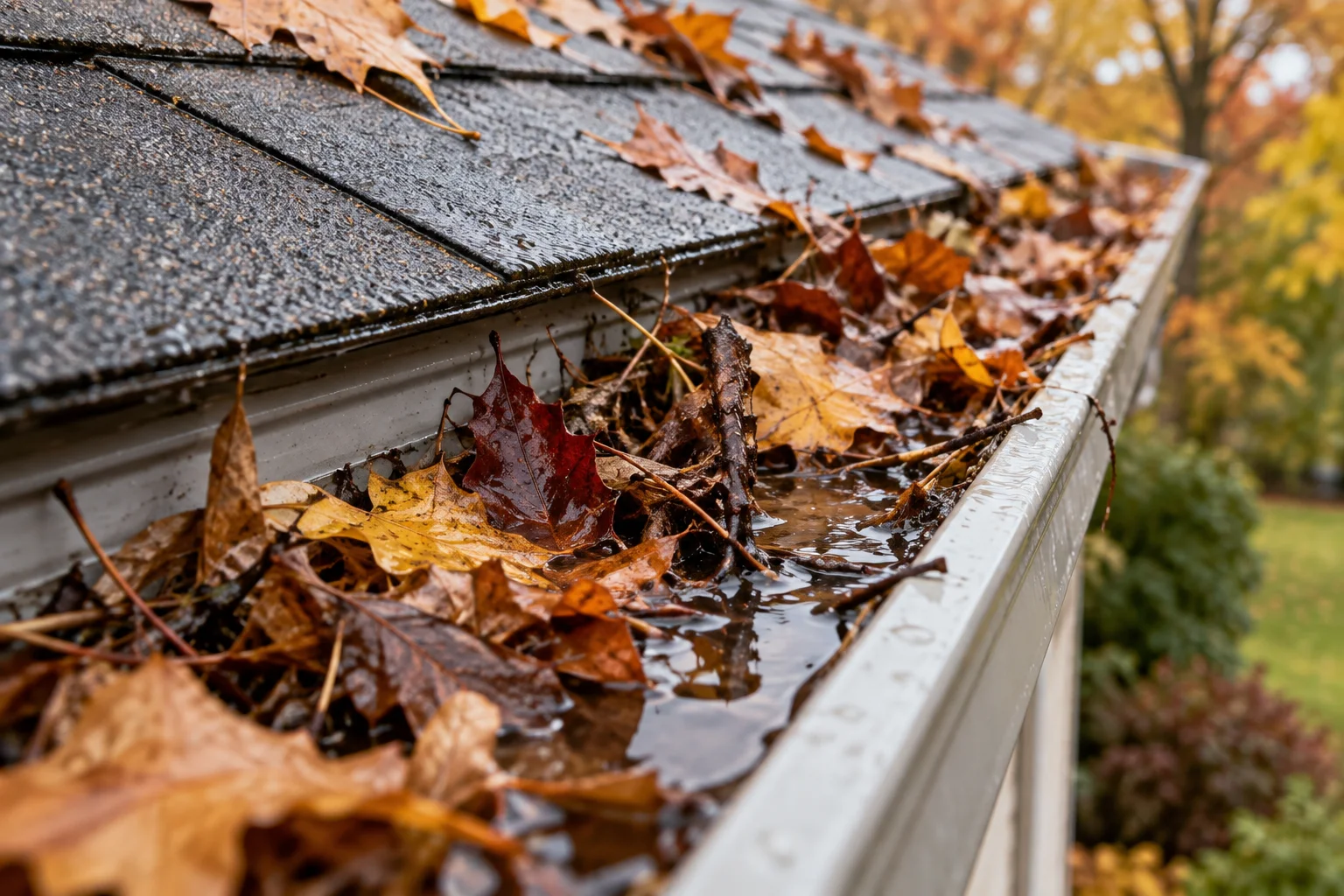
When wet leaves pack into a gutter, water has nowhere to drain. As temperatures swing between freezing and thawing through a stretch of Kansas City winter weather, that trapped water freezes into ice dams (thick ridges of ice that back water up under the roofline). The added weight can pull gutters loose from the fascia, and the trapped moisture can work its way into the roof deck and soffits. A gutter that's clear going into winter drains normally through every freeze-thaw cycle; a gutter packed with leaves turns every cold snap into a small plumbing problem on the roof.
How Often Should Gutters Be Cleaned During Kansas City's Fall Leaf Drop?
During the peak of leaf drop, most Kansas City homes with mature trees need gutters cleaned every two to three weeks from mid-September through November. Homes with fewer overhanging trees can usually stretch that to once in September and once in late October or November. If your property backs up to a wooded lot, a park, or a lake, plan on the shorter end of that range, since wind carries leaves in from neighboring yards well after your own trees have dropped. Bagging the debris for yard waste pickup as you go keeps the job manageable instead of one large haul at the end of the season.
Is It Too Late to Install Gutter Guards Once Leaves Start Falling?
No, but timing still matters. Scheduling Gutter Guard Installation before leaves fully drop means guards go on top of a clean gutter rather than over debris that's already packed in, so getting it done in September or early October beats the rush most homeowners hit once color peaks in mid-fall. If leaves have already started dropping, gutters typically still get cleaned first, then guards go on right after, so nothing gets sealed in underneath.
Which Kansas City Trees Drop the Most Leaves Into Gutters?
Silver and red maple, pin oak, sweetgum, and sycamore are some of the heaviest leaf producers across the Kansas City metro, and all four are common street and yard trees in older neighborhoods. Maple trees tend to drop earliest and fastest, often shedding most of their canopy inside a single windy week, while oaks and sycamores hold leaves longer into November. A property with a mix of these trees usually sees two distinct waves of leaf drop rather than one, which is part of why a single fall cleaning rarely covers the whole season.
Sycamore leaves are among the largest to hit a Kansas City roofline, often as wide as a hand, and their size means it takes far fewer of them to bridge a gutter's width and start damming water even before smaller leaves arrive. Pin oak leaves are smaller and more deeply lobed, but they're tougher and slower to break down, so they tend to mat together into a dense layer rather than blow through with the wind, and that layer holds moisture against the metal long after a rain has passed. Sweetgum adds another wrinkle: alongside its star-shaped leaves, the tree drops spiky seed pods that can wedge into gutter guard mesh or downspout openings even after the guard itself is doing its job on the leaves. Silver and red maple leaves are lighter and drier, which lets wind carry them into gutters from several yards away, so a property doesn't need its own maple tree overhead to end up with a maple-heavy gutter. Because these species shed on different timelines, mixed-canopy properties often see a lighter first wave dominated by maple in mid-September, followed by a heavier, wetter wave of oak and sycamore leaves through late October and into November, which is why a single cleaning timed to the calendar rather than the actual drop pattern so often misses one wave entirely.
Do Gutter Guards Actually Work During Heavy Leaf Fall?
Quality gutter guards make a real difference, but not every guard style performs the same in heavy leaf fall. Fine stainless mesh sheds most leaf debris while still letting water through, which is why many Kansas City homeowners move away from foam inserts. Mesh designs generally outperform a foam gutter guard alternative since foam can trap fine debris and seed pods even while blocking larger leaves. No guard eliminates gutter maintenance completely: an annual inspection still catches shingle grit, seed pods, and stray branches that even good guards miss.
Frequently Asked Questions
What is the best time of year to clean gutters in Kansas City?
The best time is usually twofold: once in September before peak leaf drop, and again in late October or November after most trees are bare. Cleaning only once often means missing either the early maple drop or the later oak and sycamore drop. Homes near heavy tree cover benefit from a mid-season check in early October as well.
How much does gutter cleaning cost in Kansas City?
Cost varies with roof size, gutter length, number of stories, and how much debris has built up, so a home with steep pitches or heavy tree cover typically runs higher than a single-story home with light debris. Those same variables (roof pitch, tree cover, and gutter length) are the ones that drive gutter guard cost estimates as well, so a property-specific quote is the most accurate way to know either number.
How can I tell if my gutters are already clogged with leaves?
The clearest sign of gutters clogged with leaves is water spilling over the front edge during rain instead of draining through the downspout. Sagging sections, visible buildup from the ground, water stains on the fascia board, or plants sprouting in the trough are other reliable signs. Any of these during a fall rainstorm is a signal to get the gutters cleared before the next freeze.
Should gutters be cleaned again after all the leaves are down?
Yes, in most cases. Even after the visible leaf drop ends, wind continues to carry debris from neighboring trees for another week or two, and a final check heading into winter confirms downspouts are clear before freezing temperatures set in. Skipping this last pass is one of the more common reasons homeowners see ice dams despite cleaning earlier in the fall.
Get Your Kansas City Gutters Ready Before the Leaves Finish Falling
Fall leaf drop in Kansas City moves fast once it starts, and the homes that stay ahead of it are the ones that book a cleaning before the peak rush hits. Contact The Gutter Guys to get a fall gutter cleaning scheduled while there's still time before the season's first freeze.