

When leaves, pine needles, and debris clog your gutters, water has nowhere to go except over the edge or back into your roofline. Allmeshpro gutter guard installation addresses that problem at the source by placing a precision-engineered micro mesh barrier over your existing gutters, letting rainwater through while keeping organic material out. For homeowners who are tired of climbing ladders or paying for repeated cleanings, this system offers a durable, low-maintenance alternative that holds up through every season.
This guide covers how Allmeshpro works, what the installation process looks like, and what to expect when you bring in a professional crew to do it right.
What Makes Allmeshpro Different From Other Gutter Guards
Not all gutter guards are built the same. Foam inserts, screen covers, and reverse-curve designs each have trade-offs. Micro mesh systems like Allmeshpro occupy a different tier, designed specifically to filter out the fine debris that coarser guards let through.
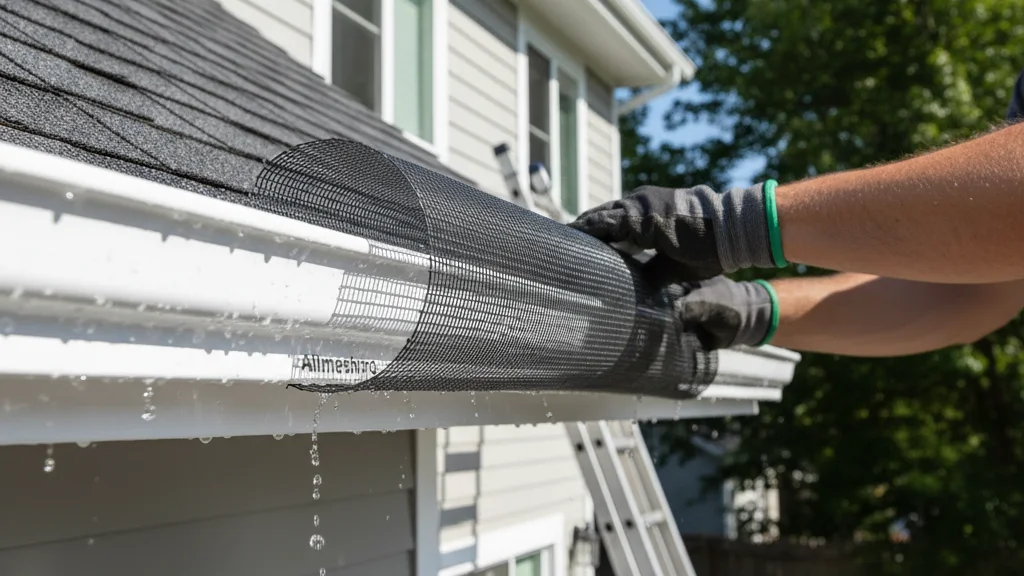
Allmeshpro uses a fine stainless steel mesh stretched over an aluminum frame. The mesh openings are small enough to block shingle grit, seed pods, and small needles while maintaining consistent water flow during heavy rain. The aluminum frame is engineered to sit flush with the roofline, which reduces wind lift and prevents debris from collecting on the surface edge.
This combination of materials gives the system its durability advantage. Stainless steel resists rust and corrosion over the long term, and aluminum does not warp under temperature swings the way plastic-based guards do. In climates with freezing winters or intense summer heat, that thermal stability matters.
How Allmeshpro Gutter Guard Installation Works
Installing Allmeshpro is not a simple clip-on job. Getting the system to perform as designed requires careful preparation and precise fitting. Here is what the installation process involves from start to finish.
Pre-Installation Gutter Inspection
Before any guard goes on, the existing gutters need to be evaluated. Installers check for proper slope, secure fastening, and signs of rust, separation, or damage. Gutters that are sagging, leaking at seams, or pulling away from the fascia need to be corrected first. Installing a guard system over compromised gutters locks in the problems underneath.
The gutters are also thoroughly cleaned at this stage. Any accumulated debris, silt, or standing water is cleared out so the guard sits on a clean surface and the drainage path is unobstructed from day one.
Cutting and Fitting the Guards
Allmeshpro panels are cut to length on site to match each run of gutter precisely. Corners, miters, and end caps all require custom fitting. Installers work around downspout openings and any obstacles along the roofline to ensure the system covers the full gutter without gaps.
The panels are secured according to the manufacturer's specifications, which typically involves sliding the back edge under the first row of shingles and securing the front lip to the gutter. This anchoring method keeps the guard stable and maintains the proper angle for water to sheet off into the channel below.
Downspout and Drainage Verification
After the guards are set, a water test confirms that flow is moving correctly through the entire system. Downspouts are checked for clogs or restrictions, and splash patterns are observed to make sure water is directing away from the foundation. If any panel shows pooling or channeling in the wrong direction, it is adjusted before the job is called complete.
Why Professional Installation Matters for Micro Mesh Systems
Micro mesh gutter guards are more sensitive to installation errors than simpler designs. A panel that is pitched at the wrong angle will let surface water run off the guard instead of filtering into the gutter. A gap at a corner or end cap becomes a bypass for debris. A guard that is not anchored correctly can lift in wind and allow material to enter from the sides.
Professional installers who specialize in gutter protection understand these failure points and know how to avoid them. They have the right tools to make precise cuts, the experience to recognize when a gutter needs repair before the guard goes on, and the familiarity with the Allmeshpro system to ensure each panel is seated correctly.
Attempting a DIY installation on a multi-story home also introduces safety risk. Working at height on a ladder while managing panels, fasteners, and tools is a situation where the cost of hiring a crew becomes easy to justify.
What to Expect After Installation
One of the most common questions homeowners ask after installing gutter guards is whether they still need to clean their gutters. The honest answer is that maintenance requirements drop significantly but are not completely eliminated.
Debris will collect on the surface of the mesh over time, particularly under trees that drop fine seeds or sticky residue. A quick rinse from a garden hose once or twice a year is usually enough to keep the surface clear. Because the system prevents debris from entering the gutter itself, the interior stays clean and free-draining without intervention.
The gutter interior should still be inspected periodically to confirm that nothing has found its way in through downspout openings or compromised sections. Professional gutter protection companies typically offer maintenance plans that include periodic inspections to catch any issues before they develop into bigger problems.
Common Questions About Micro Mesh Gutter Guard Performance
Homeowners often want to know how micro mesh systems handle specific conditions before committing to an installation. A few performance points worth understanding before you install Allmeshpro:
Heavy rain events. Fine mesh does slow water entry slightly compared to an open gutter. In most cases the mesh moves water fast enough that overflow is not an issue, but gutters with an undersized profile relative to the roof area they drain may need to be evaluated. A professional assessment accounts for this during the pre-installation inspection.
Ice and snow. Micro mesh systems are generally compatible with cold climates. The aluminum frame and stainless mesh do not absorb water, which reduces the risk of ice forming within the guard itself. Ice dams are a separate roofing concern that gutter guards do not directly address, though keeping gutters clean and free-draining is part of a sound cold-weather roof management strategy.
Small debris like pine needles. Fine mesh is designed to handle exactly this. Needles sit on the surface and blow off or rinse away rather than entering the gutter and accumulating into mats that restrict flow.
Choosing a Qualified Installer for Gutter Protection
The Allmeshpro system performs at its best when installed by a crew that works with it regularly. Look for installers who can demonstrate experience with micro mesh systems specifically, not just general gutter work. Ask whether they inspect and repair gutters as part of the installation process, and what their post-installation verification step looks like.
Warranty coverage is another consideration. Quality gutter protection installs typically come with both a product warranty and a workmanship warranty. Understanding what each covers and for how long helps set realistic expectations about the long-term relationship with your installer.
If you are in the area, The Gutter Guys specialize in professional micro mesh gutter guards and can assess your home's specific setup to recommend the right approach for your roofline, debris load, and drainage needs. Getting a professional evaluation before committing to an installation saves time and prevents the frustration of a system that underperforms because it was not matched correctly to the home.
FAQ
How long does Allmeshpro gutter guard installation typically take?
For most single-family homes, installation can be completed in a single day. Larger homes with more linear footage, complex rooflines, or gutters that need repair work first may require additional time. Your installer will give you a specific estimate after reviewing the scope during the initial inspection.
Will Allmeshpro work with my existing gutters, or do I need new gutters first?
In many cases, Allmeshpro can be installed over existing gutters that are in good structural condition. If the gutters are damaged, heavily corroded, or improperly pitched, those issues should be corrected before the guards go on. A professional installer will identify any necessary repairs during the pre-installation evaluation.
Can Allmeshpro gutter guards handle heavy rainfall without overflow?
Micro mesh systems are engineered to move water efficiently while filtering debris, and they perform well in most rainfall conditions. Homes with very large roof sections draining into undersized gutters may need a gutter upgrade alongside the guard installation. A site assessment by a qualified installer will determine whether your current gutter size is adequate for your drainage load.