
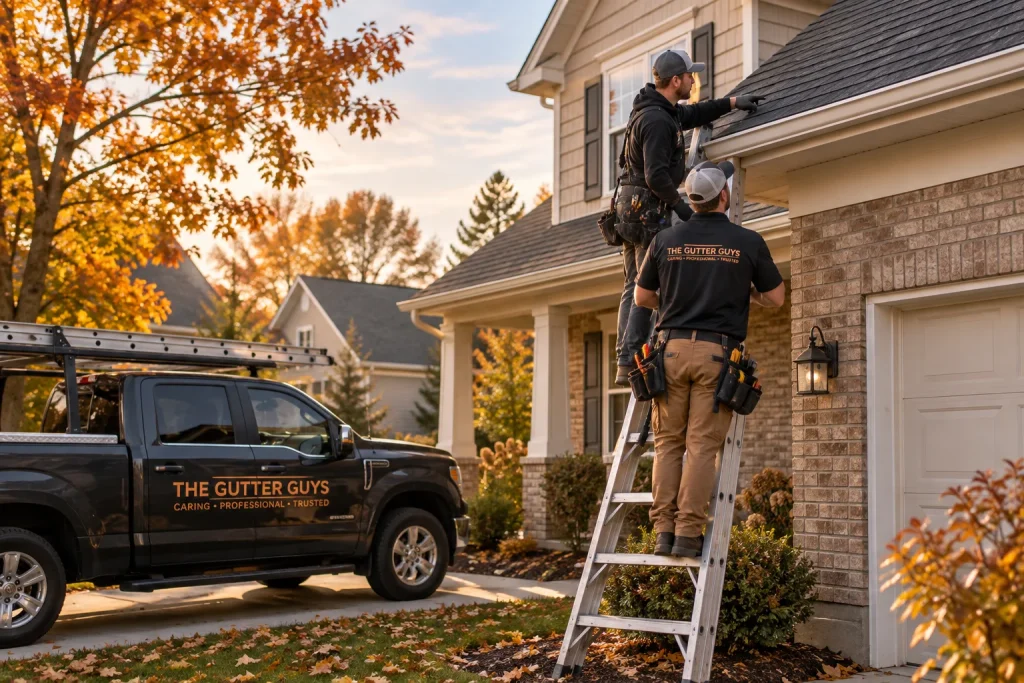
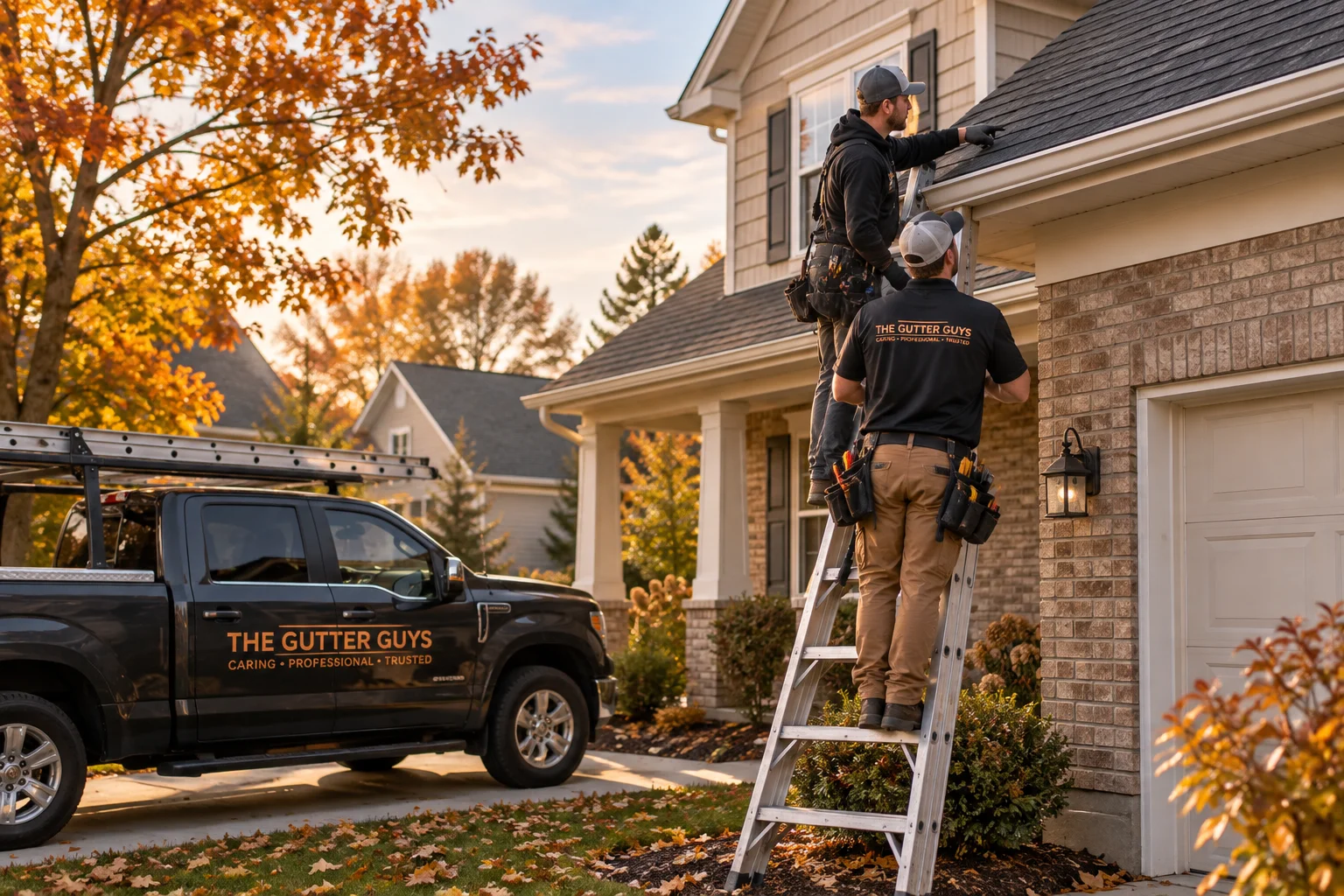
If your roofing crew is already on the ladder this fall, it's the right moment to decide whether to replace your gutters alongside a new roof instead of treating them as two unrelated jobs. Bundling gutter replacement with roof work protects fresh shingles from ice dam backup and saves a second round of scaffolding later.
By The Gutter Guys Team, Gutter Installation Experts
Should You Replace Gutters With a New Roof?
If your home needs a new roof, gutters usually aren't far behind, and coordinating both projects at the same time gives you a cleaner result than treating them as separate jobs months apart. Roofing crews remove and reset the drip edge, flashing, and fascia boards that your gutters hang from, so any hanger damage, sagging sections, or rust spots get exposed while that trim is already off. The best time to make this decision is before a single shingle comes off, while your Roofing Services team and gutter installer can still walk the roofline together and agree on what stays and what gets replaced. Homeowners who wait until after a roof replacement is finished often end up paying for a second site visit just to remove gutters that could have come down during the roofing crew's first day on the ladder.
What Order Should Roofing, Gutters and Gutter Guards Go In?
The sequence that avoids redoing work twice is to replace the roof first, then the gutters, then the gutter guards last, in that order. That's the core question behind every scheduling decision: should you replace gutters with a new roof at once, or handle them as two separate projects a year apart? Skipping ahead, like hanging new gutters before the roofers strip old shingles, almost guarantees falling debris dents or clogs them before the project is even finished.
Do Gutters Need to Come Down Before Roofing Starts?
In most cases, yes. Roofers pulling old shingles and old drip edge need a clear roofline, and gutters left hanging in place catch granules, nails, and torn shingle pieces that are hard to flush out later. Pulling the gutter sections first, even temporarily, keeps that debris off the fascia and out of the downspouts.
Do Gutter Guards Go on Before or After the New Gutters?
Gutter guards always go on after the new gutters are hung, never before. Guards attach directly to the gutter's front lip and tuck under the first course of shingles, so the roofing work and the new gutters both have to be finished first. Installing guards on old or mismatched gutters before a roof replacement usually means removing them again once the new roofline is set.
Who Handles the Gutter Removal, the Roofer or the Gutter Company?
This varies by contractor. Some roofing crews remove and reset gutters as part of their own scope, while others expect a separate gutter company to handle it. Confirming this in writing before either crew shows up prevents the gap where nobody actually pulls the gutters and the roofers end up working around them.
How Much Does It Cost to Replace Gutters and a Roof Together?
Pricing for a combined project depends on your home's roofline length, gutter material, and whether you're adding gutter guards, so a single number rarely applies to every house. What tends to hold steady across projects is that scheduling gutter replacement and a roof replacement in the same window saves money compared to booking two separate service calls, since both crews split the cost of scaffolding, dumpster rental, and site access. In Kansas City specifically, gutter guard pricing shifts mainly on gutter length and mesh type rather than on the roofing work itself, so guards are usually priced and scheduled as their own line item even inside a bundled project. Homeowners who replace gutters with a new roof in the same week also tend to avoid mismatched fascia color and repeat ladder fees down the road.
Is It Cheaper to Bundle the Two Projects?
Usually, yes, because you're paying for one mobilization, one round of scaffolding or ladder setup, and often one crew visit instead of two. The exact savings depends on how much your roofer and gutter installer coordinate; a fully separate booking with no shared scheduling erases most of that advantage.
How Long Does a Combined Roof and Gutter Project Take?
Most single-family homes see a roof replacement finished in one to three days, and gutter replacement typically adds another half day to a full day once the roofers are off the ladder. Gutter guard installation, when it's part of the same project, usually adds a few more hours rather than another full day, since guards attach directly to gutters that are already hung. Weather is the biggest variable: a stretch of rain can push a roof replacement back by several days, which then pushes the gutter crew's start date back with it.
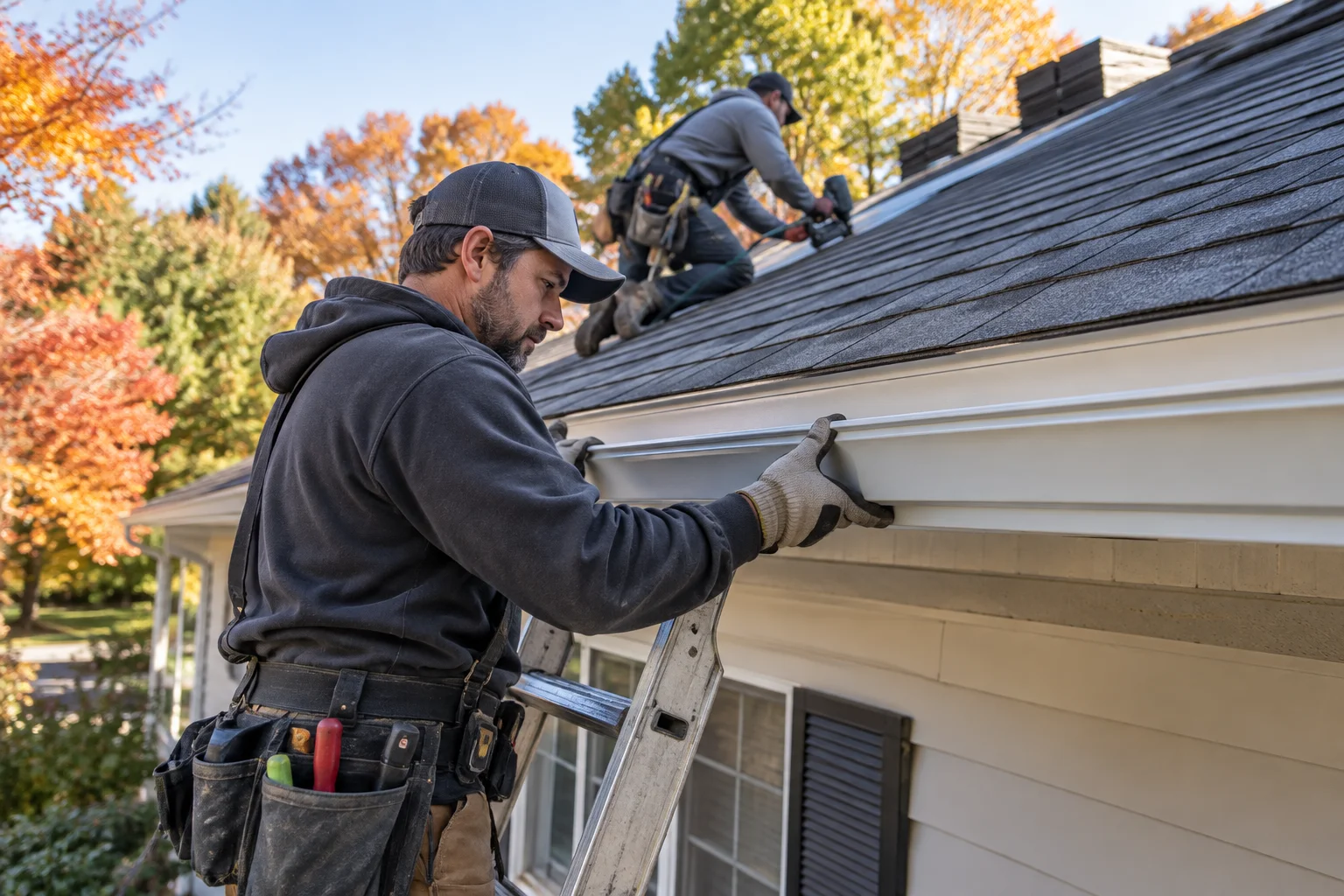
How Far in Advance Should You Book the Gutter Company Before Roofing Starts?
Booking four to six weeks ahead of your roofing start date gives both crews enough room to align schedules, order matching gutter material, and confirm who is handling removal. Fall is the busiest season for roof work in the Midwest, since homeowners want a new roof and gutters finished before winter ice and heavy snow load test the fascia, so waiting until the week roofing starts to call a gutter company often means missing the fall season window entirely and sliding the gutter portion into late winter. If your roofer already has a date locked in, call your gutter company as soon as that date is confirmed, not after the crew arrives.
What Signs Mean Your Gutters Won't Survive a Roof Replacement?
A handful of signs point to gutters that won't make it through a roof replacement in good shape, and catching them before the roofing crew arrives saves a wasted repair. Rust streaks, pulling seams, and sections that sag away from the fascia are the clearest signs your home needs gutter replacement rather than a reinstall, since the roofing work will only stress those weak points further. Most homeowners plan to replace their roof only once every twenty to thirty years, which is exactly why gutter condition matters so much at the same moment. Gutters already struggling to move rain and heat-cycled debris through the downspouts in summer are unlikely to hold up once roofers are walking the roofline and knocking loose granules and old flashing into them. Signs of gutter failure like these are worth checking every fall, since leaves and early winter rain make small gaps and loose hangers much more obvious.
Frequently Asked Questions
Can old gutters be reused after a roof replacement?
In some cases, yes, if the gutters are aluminum, still square to the fascia, and free of rust or seam separation. Most roofers and gutter installers recommend a fresh hang anyway, since removing and rehanging can stress old hangers and seams, and minor gutter repairs afterward are common even when the gutters technically survive the process.
Will a new roof void my gutter warranty, or will new gutters void my roof warranty?
Usually not, as long as the crew doing the work is qualified and doesn't damage the other system in the process. Most manufacturer warranties cover material defects rather than cross-trade work, but it's worth confirming with both your roofer and your gutter installer in writing before work starts, since terms vary by manufacturer.
Do I need to hire the roofing company and the gutter company separately?
In most markets, yes, roofing and gutters are handled by separate trades even when a project is bundled. What matters more than hiring one combined company is making sure both crews are scheduled around the same window and communicate about removal, debris cleanup, and who resets the gutters once the new roof is on.
What happens if roofing debris damages my existing gutters during the project?
Dented or cracked gutters from falling shingles, nails, or dropped tools during a roof replacement are common enough that it's worth asking your roofer about their damage policy before work starts. If gutter replacement is already planned as part of the project, minor roofing damage usually just confirms the timing was right.
Get Your Roof and Gutter Timeline Coordinated
The Gutter Guys Team can walk your roofline with you before your roofing crew ever shows up, confirm whether your current gutters should come down, and schedule gutter guard installation for right after the new gutters go up. Contact us to line up your timing before the fall season books solid.