

Spring brings longer days and warmer temperatures, but it also brings some of the most intense rainfall of the year. For homeowners who have been putting off gutter upgrades, this is the moment that matters. Spring gutter guard installation is one of the most practical steps you can take before heavy storms arrive, and getting it done early means your drainage system is ready when it needs to perform. Waiting until water is already pouring over your gutters or pooling against your foundation means the damage is already in progress.
This guide explains why spring is the ideal time to upgrade your gutters, what to look for in a quality gutter protection system, and how a professional installation protects your home season after season.
Why Spring Is the Right Time for a Gutter Upgrade
Most homeowners think about gutters in the fall, when leaves are clogging every trough on the house. But spring creates its own challenges, and gutters that are not clean and protected before the rainy season are a liability.
Winter leaves debris behind. Twigs, decomposed leaves, seed pods, and mineral buildup from ice and snow accumulation all settle into gutters over the colder months. When spring rain arrives, that debris creates blockages that prevent water from moving toward the downspouts. The result is overflow, which sends water directly against your siding, fascia boards, and foundation.
Spring is also when trees are actively producing pollen, seed clusters, and early leaf growth, all of which shed freely and find their way into open gutters. Installing gutter guards before this cycle begins keeps that material on the exterior of the system where it belongs, rather than compacting inside the trough.
The Drainage Problem That Builds Gradually
Gutter damage rarely announces itself with a single dramatic event. It builds over time. A partial clog slows drainage but does not stop it entirely. Homeowners may not notice anything is wrong until they see staining on the siding, water marks on the soffit, or soft spots in the fascia wood. By that point, the water has been infiltrating for weeks or months.
Installing gutter protection before the wet season creates a barrier that keeps debris out from the start. Instead of managing blockages reactively, you're preventing them from forming.
What Gutter Guards Actually Do
Gutter guards are designed to allow water to flow freely into the gutter while blocking solid debris. The specific mechanism varies by product type, but the goal is the same: reduce the amount of material that enters the channel so that water can drain without obstruction.
Common guard types include:
- Micro-mesh guards, which use a fine screen stretched over a frame to filter out particles while letting water pass through
- Reverse curve guards, which rely on surface tension to pull water into the gutter while solid debris falls off the edge
- Foam inserts, which sit inside the gutter channel and allow water to seep through while blocking larger debris
- Brush inserts, which use a cylindrical brush shape to catch debris on the bristles while water drains below
Not every product performs equally in every climate or under every type of tree canopy. A home surrounded by pine trees, for example, needs a different solution than one next to a maple. Small needles require a finer mesh than large leaves do, and a product that works well in a dry climate may struggle in a region with heavy, sustained rainfall.
Why Product Selection Matters
A low-quality gutter guard that lets fine debris through or that directs water over the edge instead of into the trough creates new problems rather than solving old ones. Before committing to any product, it's worth understanding what type of debris your specific property generates and how much rainfall your area receives during peak months.
Professional installers assess these conditions before recommending a product. That site-specific evaluation is one of the key advantages of working with an experienced crew rather than purchasing a box-store solution and attempting a DIY install.
The Case for Professional Spring Gutter Installation
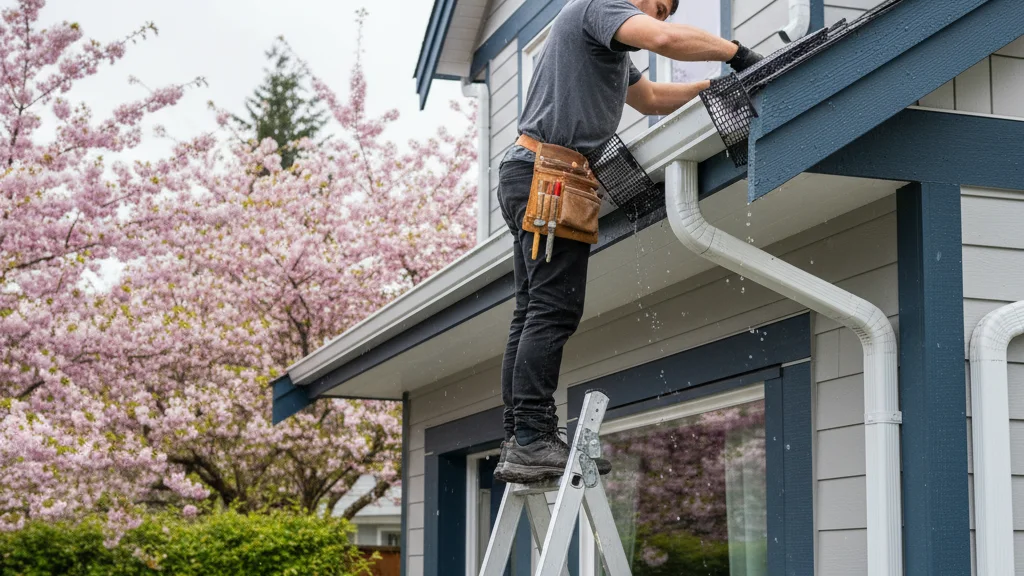
Gutter installation looks simple from the ground, but working at height with ladders, dealing with pitch variations, and ensuring proper slope for drainage requires real skill. Improper installation is one of the most common reasons gutter systems underperform.
Professional spring gutter installation includes more than just attaching guards. A thorough job begins with inspecting the existing gutters for damage, cleaning out any leftover debris from winter, checking that the slope is correct for water movement, and resealing any joints that have started to separate. Only after the gutters themselves are sound does installation of the guard system make sense.
Skipping the inspection and jumping straight to guard installation means you're protecting gutters that may already be compromised. That approach adds cost to the system without solving the underlying drainage problem.
Signs Your Gutters Need Attention Before Guard Installation
If any of the following are present, address them before adding a protection system:
- Sections that have pulled away from the fascia
- Visible rust or holes in aluminum or steel gutters
- Joints that have separated and are leaking at the seams
- Gutters that sag in the middle due to improper pitch
- Downspouts that are disconnected or draining too close to the foundation
A professional installer will flag all of these during the pre-installation inspection. In some cases, replacement of a section or the full gutter run makes more sense than adding protection to a system that is already failing.
Installing Gutter Protection Before Spring: The Timing Advantage
Install gutter protection before spring rains fully arrive and you gain a meaningful advantage. You're not rushing the installation under rain or dealing with scheduling delays caused by peak-season demand. Installers have more scheduling flexibility in early spring before the busy season pushes lead times out.
You also give yourself time to evaluate the performance of the new system through the first few storms and address any issues before the heaviest rainfall arrives. If something isn't draining correctly, early detection means an easy adjustment rather than an emergency call during a downpour.
A professional spring gutter upgrade completed in late winter or early spring sets your home up for the entire wet season without the stress of catching up after the fact.
Protecting Your Foundation and Landscaping
Gutters serve one primary function: directing water away from your home's structure. When that function breaks down, the consequences extend well beyond a soggy fascia board.
Foundation damage is one of the most expensive outcomes of chronic gutter failure. When water consistently overflows and pools at the base of the house, it saturates the soil around the foundation, which can cause shifting, cracking, and in serious cases, basement water intrusion. In climates where the ground freezes, saturated soil around a foundation creates additional risk of frost heaving and structural movement.
Landscaping damage is also common. Water cascading off an overflowing gutter compacts soil, erodes mulch, and can damage plants and root systems directly beneath the overflow point. Installing gutter guards that keep the system flowing properly protects the full perimeter of your home, not just the gutters themselves.
What a Professional Spring Gutter Upgrade Includes
When you work with a professional gutter company for a spring upgrade, the process typically covers the following:
- Full inspection of existing gutters, downspouts, and fascia boards
- Complete cleaning and flushing of the gutter system
- Repair or replacement of any damaged sections
- Adjustment of slope where needed for proper drainage
- Selection and installation of the appropriate guard system for your property
- Downspout extension or repositioning if water is draining too close to the foundation
- Final flow test to confirm the system is draining correctly
The outcome is a complete, functional drainage system that is ready for whatever spring delivers.
Work With The Gutter Guys This Spring
If you're ready to install gutter protection before spring storms arrive, The Gutter Guys provides professional gutter installation and guard systems for homeowners throughout the area. Their team handles the full process from inspection through installation, using products suited to your specific property and climate conditions. Getting ahead of the rainy season is the smart move, and having a professional crew handle it means the job is done right the first time. Contact The Gutter Guys to schedule your spring gutter upgrade.
Frequently Asked Questions
How long does spring gutter guard installation take?
For most homes, a professional gutter guard installation is completed in a single visit. The exact time depends on the size of the home, the linear footage of gutters, and whether any repairs are needed before the guards go on. Your installer can give you a timeline estimate after the initial inspection.
Do gutter guards eliminate the need for gutter cleaning entirely?
Gutter guards significantly reduce how often gutters need to be cleaned, but they do not eliminate maintenance entirely. Fine debris such as pollen, shingle grit, and small particles can still accumulate on top of the guards or inside the trough over time. An annual inspection is still a good practice, though the cleaning is much less intensive than with unprotected gutters.
Is spring a good time to replace gutters along with installing guards?
Yes. If your gutters are aging, showing visible damage, or were improperly pitched from a previous installation, addressing the full system in the spring makes sense. Replacing the gutters and installing guards in a single visit is more efficient than doing them separately, and it ensures the guard system is mounted on a sound foundation from the start.