
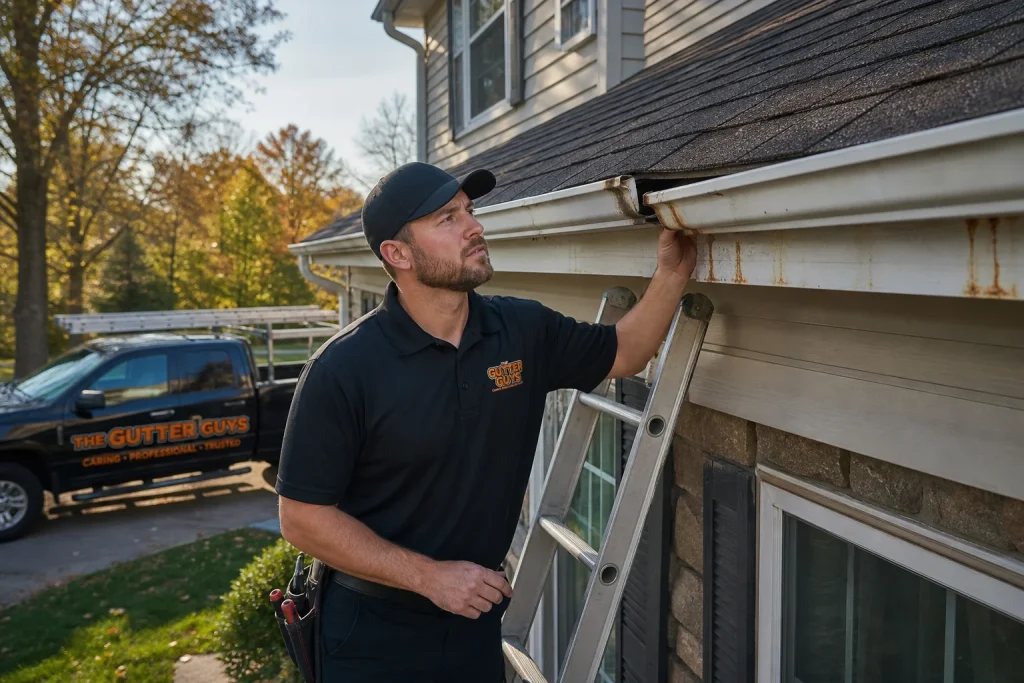
Rust spots, sagging sections, and paint peeling off your fascia board are early warnings, but the real signs your home needs gutter replacement show up when repairs stop holding. If your gutters are pulling away from the roofline or a full Gutter Replacement is overdue, catching it now protects your home from water damage.
By The Gutter Guys Team, Gutter Installation Experts
Most homeowners do not think about their gutters until water shows up where it should not. Your gutter system is designed to move rain off the roof and away from your foundation, and when it starts to fail, the signs your home needs gutter replacement usually show up gradually before they become obvious. Rust spots, visible cracks, and gutters that no longer sit flush against the fascia are all clues that a simple repair will not hold much longer. Ignoring these details rarely saves money, since a section that fails during a storm can damage fascia, soffit, and landscaping all at once.
A well maintained drainage system channels water quietly out of sight. A gutter system in good shape should carry water in a steady, visible line straight to the downspout with no dripping along the seams. Once gutters start to sag, separate at the seams, or push water back toward the siding instead of away from it, you are looking at more than a cosmetic issue. These are the most reliable signs your home needs gutter replacement season after season, and catching them early keeps a small repair from turning into a full roofing and foundation problem. Regular gutter cleaning keeps channels cleaned and flowing, but it cannot fix metal that has already rusted through.
Sagging Gutters and Sections Pulling Away From the Roofline
Sagging gutters are one of the clearest signs that a section has reached the end of its service life. When fasteners rust out or the gutter fills with debris and holds standing water, the extra weight pulls the channel down and away from the fascia board. A gutter pulling away from the roofline is not something a few new screws can fix for good, because the wood underneath is often already softened by trapped moisture. Left unchecked, small leaks at the seams turn into major repairs fast. Homeowners sometimes notice the problem only after paint or drywall on an interior wall starts to bubble near the roofline, well after the gutter itself first started sagging.
If you notice visible gaps between the gutter and the roofline, or sections that dip in the middle after a storm, debris buildup is often accelerating the problem, trapped leaves and grit hold water in the channel and add weight the hangers were not built for. A leaf guard system keeps that debris from piling up in the first place.
Rust, Cracks, and Peeling Paint Along the Fascia
Metal gutters that have started to rust from the inside out are past the point where repair makes sense. Rust weakens the metal itself, so even a small crack today can split into a long tear the next time heavy rain fills the channel. Peeling paint along the fascia board is another warning sign homeowners tend to miss, since it often looks like ordinary weathering rather than a symptom of water sitting against the wood. Vinyl and aluminum gutters show similar warning signs, including brittle spots that crack when touched and seams that separate under normal rainfall.
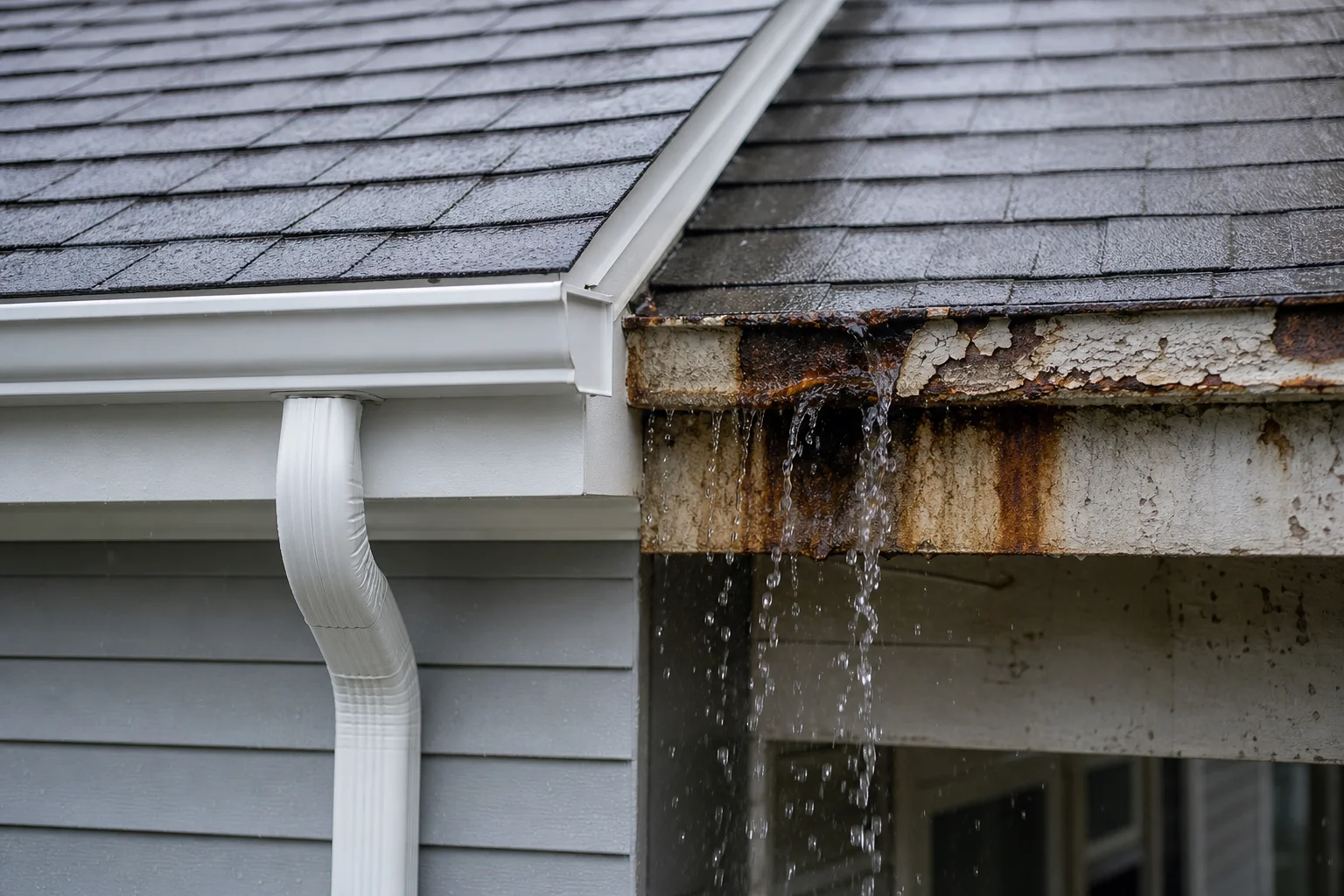
When paint bubbles, curls, or flakes off in sheets near the gutter line, water has already been seeping behind it for a while. Pair that with visible rust streaks running down the siding and you have two of the strongest signs your home needs gutter replacement rather than another round of patching. For homes that see heavy debris from nearby trees, a screen or guard fitted over the new gutters keeps leaves and needles from packing into the channel and holding moisture against the metal, which is one of the simplest ways to keep a brand new system from developing the same rust and cracking problems years down the road.
How a Failing Gutter System Leads to Water Damage
A gutter system that cannot move water efficiently sends it exactly where it should not go: down the siding, behind the fascia, and into the foundation soil. Over time, that steady water flow erodes landscaping, cracks driveways, and can seep into a basement or crawl space. Roofing and gutters work as one drainage system, so when gutters fail, the roof edge and attic ventilation often take on moisture damage too. Left alone long enough, that pattern can undermine a foundation's grading and lead to costly repairs well beyond the gutters themselves.
Water damage from a compromised drainage system rarely announces itself right away. Homeowners typically notice musty smells, bubbling drywall, or damp basement corners months after the gutters started failing. A properly sized system handles that kind of heavy water flow without backing up, which is exactly where older, undersized gutters start to fail. Heavy duty gutter guards are built to keep pace with that volume, so the channel stays clear and moving even during a hard storm.
When a Patch Job Won't Cut It Anymore
Cost is often the deciding factor, but a full replacement frequently costs less over time than repeated emergency repairs on an aging system. Repair makes sense when the damage is isolated: one loose bracket, a single seam leak, or a short section knocked loose by a fallen branch. Replacement is the better call once multiple sections show rust, sagging, or separation at the same time, or when the gutters are original to a home built more than fifteen to twenty years ago. Waiting too long to replace gutters that are already sagging often means replacing fascia boards and roof decking as well. Recognizing the signs your home needs gutter replacement early can save you from a much bigger project once the fascia and roof decking get involved.
A professional gutter inspection is the best way to know which side of that line your home falls on. Our team walks the roofline, checks the pitch and flow of every run, and gives you a straight answer instead of an upsell. Ask what material and gauge they recommend for your climate, since thicker gauge aluminum and steel hold up far better through Midwest winters. For homes with a custom roofline, a K-style profile fitted to the exact pitch and angle keeps water moving even where the roofline gets complicated, instead of forcing a generic channel onto an unusual layout. If your current setup is bare metal with no protection, Gutter Guard Installation is worth pairing with any replacement so debris does not shorten the life of the new system.
Frequently Asked Questions
What are the most common signs your home needs gutter replacement?
Sagging sections, gutters pulling away from the fascia, rust holes, and peeling paint along the roofline are the clearest signs. If you notice water pooling near the foundation or staining on the siding after rain, those point to a drainage system that is no longer moving water the way it should, and waiting usually lets the damage spread to the fascia and roof.
How do I know if my gutters need replacing instead of a repair?
One or two isolated problems, like a loose bracket or a small seam leak, usually mean a repair. Multiple sections with rust, sagging, or separation at the same time typically mean the whole run should be replaced rather than patched piece by piece, especially if the gutters are original to an older home.
What does peeling paint near the gutters mean?
Peeling paint along the fascia usually means water has been sitting against the wood longer than it should. It is often one of the earliest visible signs your home needs gutter replacement, since the paint failure shows up before the wood underneath starts to rot or soften enough to pull screws loose.
How often should gutters be inspected?
Most homes benefit from a professional gutter inspection at least once a year, ideally in early fall before leaves and debris pile up. Homes surrounded by mature trees or with a history of clogging may need a closer look twice a year to catch sagging or rust before winter rain and snow arrive.
Does gutter guard installation help new gutters last longer?
Yes. Guards reduce the debris that causes standing water, rust, and added weight on the hangers, which are common reasons gutters fail early. Pairing gutter guard installation with a replacement helps protect the investment and keeps cleaning needs to a minimum, so the new system stays effective for years longer.
Get a Free Gutter Replacement Estimate
If you are seeing rust, sagging sections, or peeling paint along your fascia, do not wait for the next storm to find out how bad it has gotten. Our team has handled gutter replacement and repair across the Midwest and can tell you honestly which one your home actually needs. Contact our team for a free, no pressure inspection and a clear answer on repair versus replacement.