
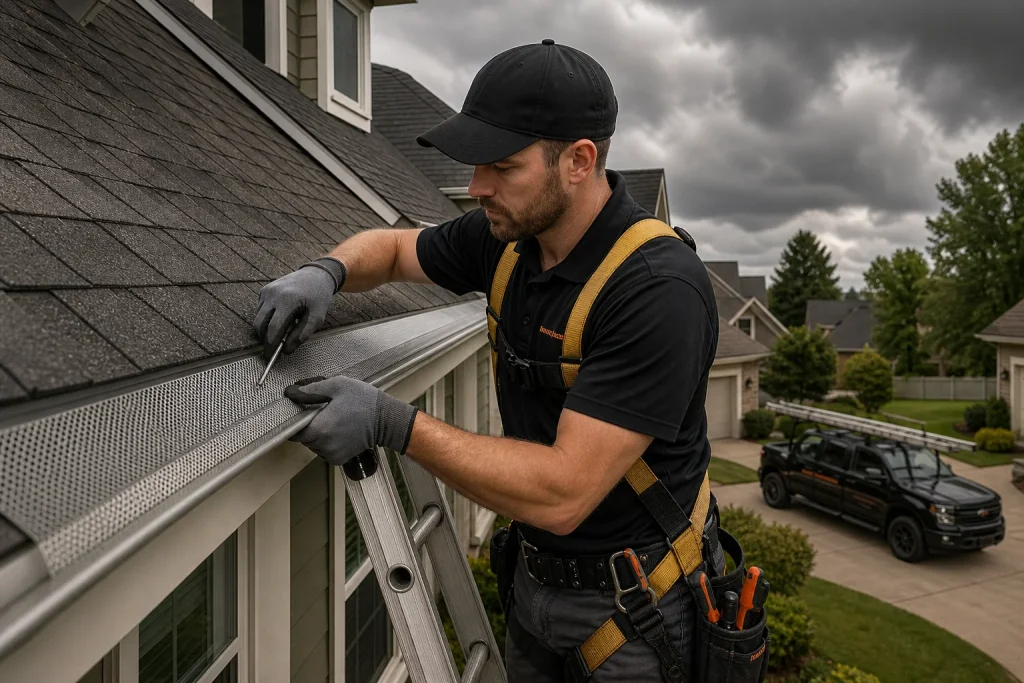
After a major storm, heavy rainfall can overwhelm your gutters in minutes, sending water straight toward your foundation walls. Heavy duty gutter guard installation for storm protection keeps your gutter system clear through even the worst weather, blocking leaves debris and pine needles before they trigger serious water damage to your home.
Why Midwest Storms Put Your Gutters Under Pressure
Midwest homeowners know the pattern: a fast-moving storm drops two inches of rain in under an hour, and suddenly gutters are overflowing. The problem usually is not the gutter itself. It is what built up inside before the storm arrived.
When a gutter system fills with leaves debris, pine needles, and compacted dirt, water has no clear path forward. It backs up, spills over the edge, and pools against your foundation. Over time, that pooling leads to water damage that compounds: cracked foundations, rotting fascia boards, flooded basements, and ruined landscaping.
Heavy storms also deposit a particularly hard-to-manage mix of material. Pine needles are especially problematic because they are long, thin, and work into standard mesh openings easily. Wet leaves clump and seal over the gutter channel. And when water flow needs to move fast, any partial blockage quickly becomes a full blockage.
Choosing the right protection before storm season starts makes a great difference in how your gutter system handles the next heavy rain. Modern heavy duty gutter guards are purpose-built for exactly these conditions.
What Makes a Gutter Guard Truly Heavy Duty
Some homeowners make heavy weather of the decision between basic and advanced gutter protection. The distinction comes down to a few core features that determine how a guard performs when conditions get hard.
Standard plastic snap-in guards warp under heavy load and prolonged UV exposure. Foam inserts trap fine debris and grow mold over time. Neither product is engineered for the kind of heavy rainfall and wind that Midwest homes regularly face.
Heavy duty gutter guards are built with these conditions in mind. The key features that separate them from standard options include:
- Micro-mesh screens with openings small enough to stop pine needles while allowing full water flow
- Stainless steel construction that resists rust, corrosion, and warping through freeze-thaw cycles and direct sun
- Reinforced frames that hold their shape under heavy load from snow, ice, and compacted debris
- Sloped surface geometry that sheds debris naturally rather than letting it accumulate and form a mat
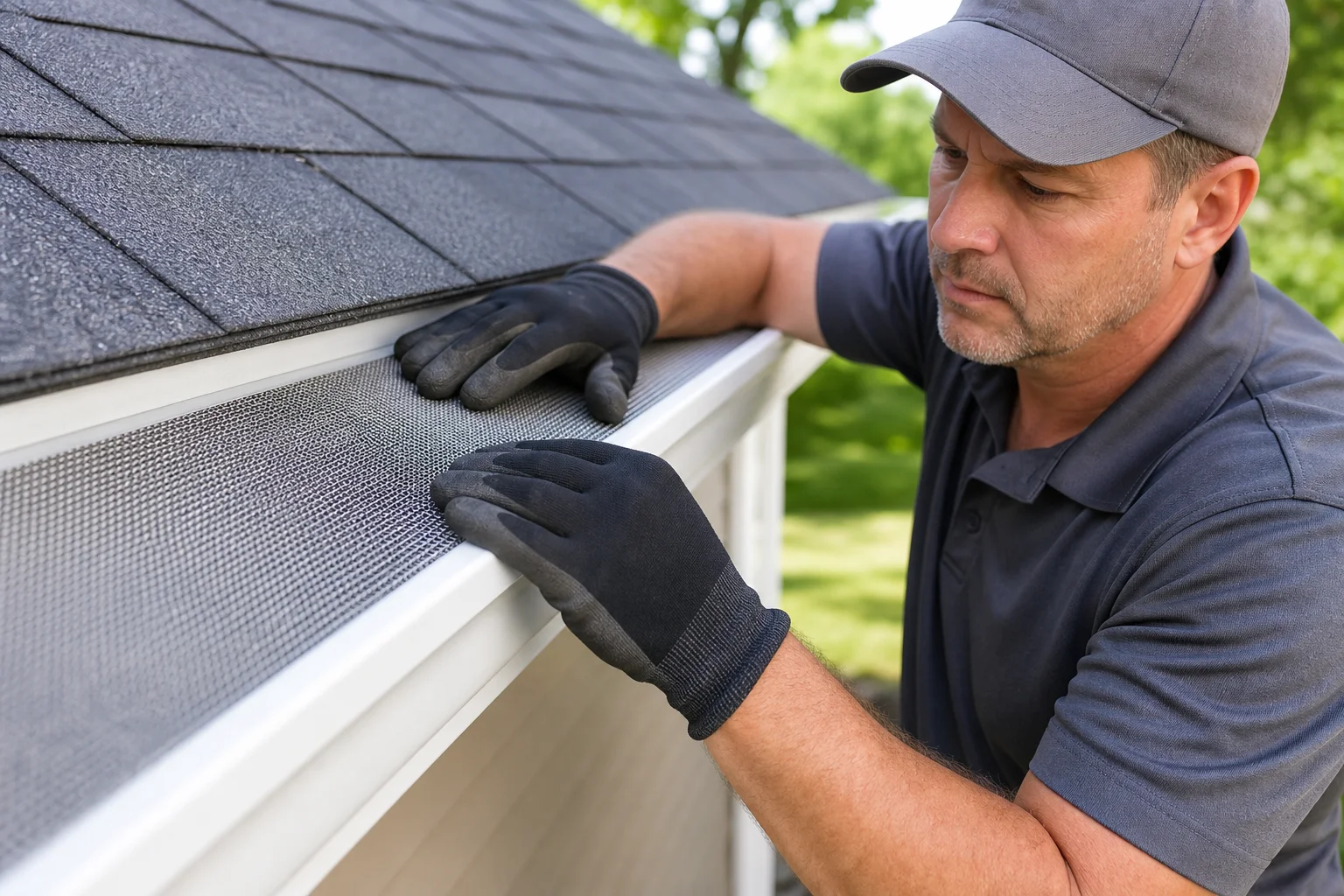
Stainless steel micro-mesh has become the industry standard for high-performance gutter protection. The fine weave handles even heavy rainfall without overflow while keeping out pine needles, shingle grit, and small seeds. Unlike aluminum or plastic alternatives, stainless steel holds its shape over the long term, which means the guard continues performing years after installation without sagging, bowing, or corroding.
When comparing products, give extra weight to mesh opening size and frame material. Those two features do more work than any other specification when storm performance is the goal.
How to Install Gutter Guards for Maximum Storm Protection
Knowing what product to choose matters. Knowing how to install gutter guards correctly is what makes the difference between a system that holds through a major storm and one that fails when it is needed most.
Here is the process a professional crew follows when they arrive at your home with a well-equipped truck loaded with the right tools and materials.
Clear the Gutter System First
No gutter guard performs well over a dirty gutter. Before you install gutter guards, the entire gutter system needs to be flushed and cleared of all leaves debris, pine needles, and standing sediment. Any rust spots or sagging sections should be repaired at this stage. Installing guards over a damaged gutter is one of the most common and costly installation mistakes.
Inspect and Correct the Pitch
Water flow depends on correct pitch. Gutters should slope approximately one quarter inch for every ten feet toward the downspout. A level or string line confirms this before installation begins. If the pitch is off, adjusting the hanger positions corrects it without replacing the gutter entirely.
Measure and Cut Guards to Fit
Quality micro-mesh gutter guards come in standard lengths, typically four to five feet per section. Measure each run carefully and cut sections to fit corners and end caps cleanly. Sloppy cuts leave gaps where pine needles and small debris work their way underneath the guard surface over time.
Secure to the Gutter Frame
Install gutter guards by sliding the back edge under the first row of shingles and snapping or screwing the front lip to the outer gutter edge. Avoid over-driving fasteners that could pull the gutter away from the fascia. Each section should sit flat with no visible gaps between panels.
Test the Water Flow
After installation, run a hose along the roofline and watch how water moves across the guard. It should sheet across the mesh, curve at the nose, and drop into the gutter channel below. Any pooling on top of the guard or overflow at the edge points to a gap or pitch issue that needs correction before the job is complete.
Long-Term Value: What Storm-Ready Protection Actually Saves
Some homeowners treat gutter maintenance as a small recurring cost that is easy to absorb. Over a decade, the picture looks different.
Gutter cleaning runs two to four times per year in areas with heavy tree coverage. Multiply that over ten years and the cumulative labor cost is significant. Add in the risk of water damage to foundations, fascia boards, or roof decks from a chronically clogged gutter system, and the case for upfront protection becomes strong.
According to the Insurance Information Institute, water damage and freezing are among the most frequently filed and most costly homeowner insurance claims each year. While gutter guards are not a substitute for a full home maintenance plan, they directly reduce one of the biggest sources of overflow-related damage risk.
A properly installed stainless steel micro-mesh guard on a maintained gutter system can last fifteen to twenty years with minimal upkeep. That is a weighty long-term investment, and one that pays back through avoided repairs rather than a single line item on a receipt. For homeowners ready to explore options, our gutter protection services cover a range of products suited to different tree coverage and storm conditions.
Frequently Asked Questions
Do gutter guards really block pine needles?
Micro-mesh gutter guards with stainless steel construction are specifically designed for this challenge. Pine needles are long, thin, and work into standard mesh openings easily. Fine-weave stainless steel mesh with openings smaller than one millimeter blocks pine needles reliably while still allowing full water flow during heavy storms. Standard plastic or aluminum guards are far less effective against fine debris.
How long does heavy duty gutter guard installation take?
For a professional crew, a single-story home with standard gutter runs typically takes four to six hours from start to finish. Two-story homes or homes with complex rooflines take longer. The work requires advanced ladder positioning and precise pitch calibration, which is why professional installation is especially recommended for anything above single-story access.
Will gutter guards eliminate all gutter maintenance?
No. Even the best gutter guard reduces maintenance; it does not eliminate it entirely. Fine debris, pollen, and shingle grit can accumulate on the mesh surface over time. A quick rinse once or twice per year is typically all that is needed to keep a properly installed stainless steel system running at full capacity.
Can I install gutter guards on existing gutters?
Yes, if the existing gutter system is structurally sound, properly pitched, and free of major rust or damage. If gutters are sagging, pulling away from the fascia, or have holes, repairing or replacing them first gives the guards a solid base. Our gutter guard installation service includes a full inspection before any guards go up.
What time of year is best for installation?
Spring and early fall are both great windows. Spring installation prepares your gutter system for summer storm season. Fall installation protects against heavy leaf drop and winter ice buildup. If storm protection is the primary goal, schedule installation before the heavy rain season begins in your area.
Your gutters work hard every storm season, and the right protection makes sure they can handle whatever comes through. Contact The Gutter Guys to schedule a free consultation and find out which heavy duty gutter guards are the right fit for your home.