
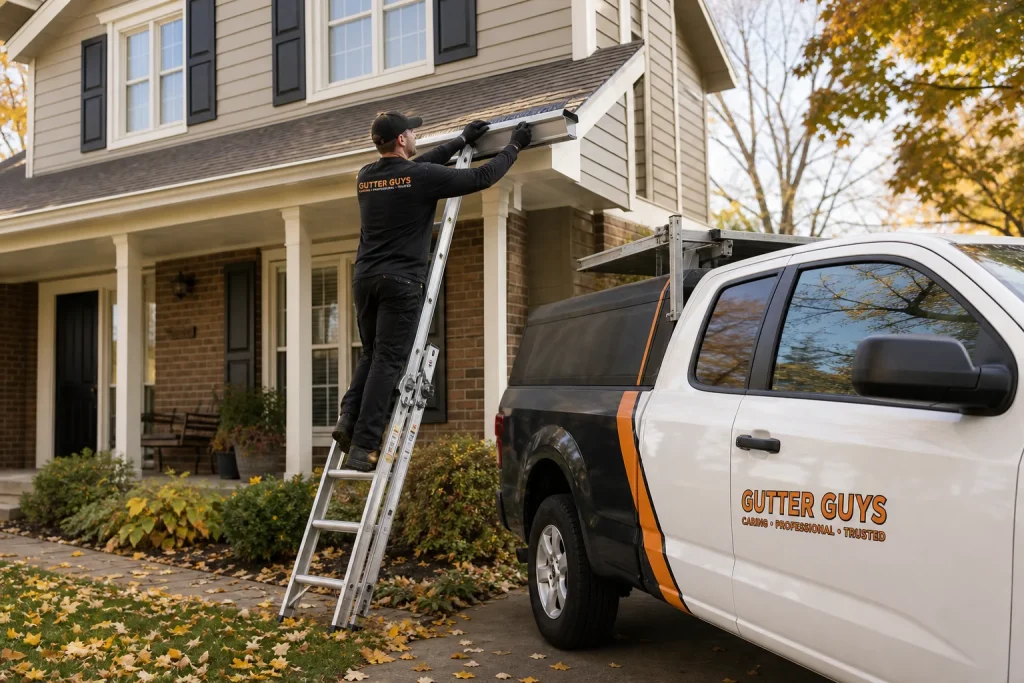
Most Central Illinois homeowners want a straight answer: do gutter guards pay for themselves? In most cases, yes, once you weigh avoided cleaning visits, prevented water damage, and reduced icing risk against the upfront investment in Gutter Protection. This breakdown walks through every line item so you can judge your own numbers.
By The Gutter Guys Team, Gutter Installation Experts
What Goes Into the Cost of Gutter Guards in Central Illinois?
The cost of gutter guards in Central Illinois breaks down into a handful of line items, and knowing them upfront turns a mystery number into something you can actually evaluate. Material is the biggest swing factor: foam inserts and basic screen guards cost far less upfront than stainless steel micro mesh guards and reverse curve systems, which run higher because the mesh openings are small enough to keep out grit and pine needles without clogging. Linear footage matters too, since a single story ranch with 150 feet of gutter runs less than a two story home with dormers and valleys that push the total past 250 feet. Roof pitch and story height affect labor, since a steep roof or a third story eave takes longer to work safely than a single story home. The condition of your existing gutters plays a role too: sagging or undersized gutters often need new hangers added to the job. Finally, professional installation, the labor to measure, cut, and fasten each section, is priced separately from materials in most quotes. Ask your installer to itemize material, footage, and labor to compare quotes apples to apples.
How Much Does Professional Gutter Cleaning Cost Without Gutter Guards?
Without guards, most Central Illinois homes need gutter cleaning at least twice a year, once after spring storms drop pollen and seed pods, and again in late fall once the oak leaves and pine needles finish coming down. Homes shaded by mature trees, or anywhere heavy leaf cover collects along a roofline, often need a third cleaning in early winter before the first freeze locks debris in place. A professional Gutter Cleaning visit from a licensed crew includes clearing the trough, flushing the downspouts, and checking for sags or loose hangers, more than most homeowners can safely inspect solo. Weighing professional cleaning against a DIY afternoon on a ladder comes down to risk as much as time: ladder falls are one of the more common home maintenance injuries, and a two story eave puts most DIY cleaning well outside a safe working height. Add up those visits over the life of a gutter system, and that recurring cost is what gutter guards are competing against.
What Clogged Gutters Cost You When They Are Not Protected
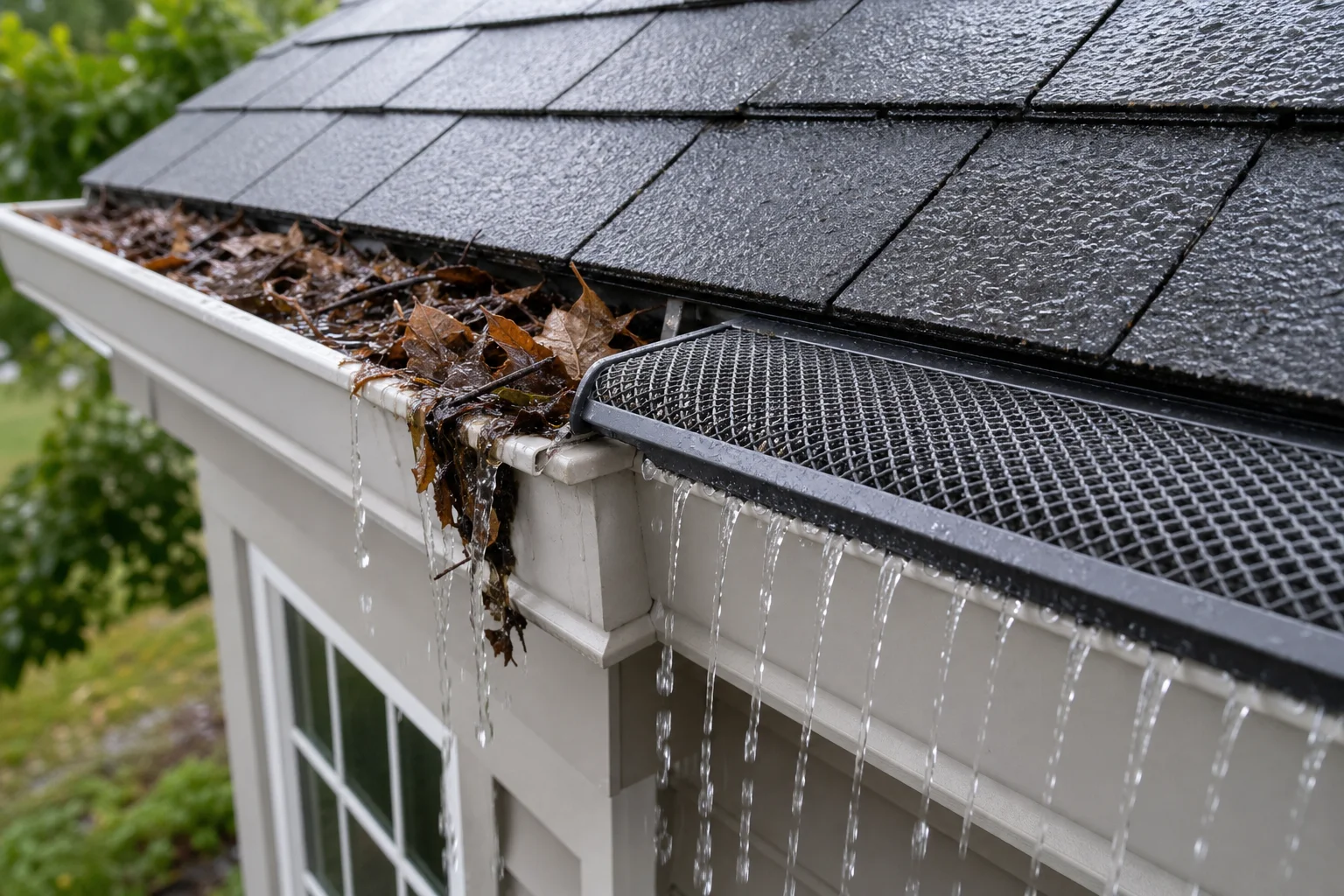
A clogged gutter doesn't fail quietly, it backs water up until it finds another way down, and that path usually ends in damage somewhere you'd rather not pay to fix. Overflow that runs behind the gutter and down the fascia board causes wood rot that can spread into the roof deck if it goes unnoticed for a season or two. Water pooling at the foundation from an overflowing downspout is one of the more expensive outcomes, since saturated soil next to a foundation wall can lead to basement seepage and, over time, settling cracks. Standing water and trapped leaf litter also create the damp conditions mold needs, both in the trough and in any wall cavity the overflow reaches. In Central Illinois winters, a clogged gutter also turns an ordinary snow melt into an ice dam: water backs up under the shingles, refreezes, and can lift roofing material right at the eave. Guards exist to keep debris from ever settling into the trough, which is what actually protects the fascia, foundation, and roof edge underneath and helps prevent that cycle before it starts.
How Long Until Gutter Guards Break Even on Cost?
Break even is the point where what you saved on cleaning visits and avoided repairs equals what you spent installing guards, and for most Central Illinois homes with moderate tree cover, that point lands somewhere in the middle years of the gutter system's life rather than the first season. The math is simple: what you'd have paid for two to three cleaning visits a year, plus the reduced odds of an ice dam or fascia repair, compared against the one time cost of installation. Homes with heavy tree cover and frequent pine needle buildup reach break even faster, since guards are replacing more cleaning visits per year. A home with little overhead canopy and only occasional debris takes longer to break even, simply because there was less recurring cost to offset in the first place.
What Determines Your Return on Investment Timeline
Three variables move the timeline most: how many mature trees overhang your roof, how many stories your home has, since taller homes cost more per cleaning visit, and which guard material you chose, since micro mesh tends to stretch useful life further past break even than basic screens. Most mesh and reverse curve systems still need an occasional brush off to clear pollen film or fine grit, but that's a five minute task, not a full cleaning appointment.
Do Gutter Guards Increase Home Value or Resale Value?
Buyers and their agents notice deferred maintenance faster than almost anything else during a showing, and clean, guarded gutters signal that the exterior has been looked after. A gutter system with guards already installed can make the fascia, foundation, and roof edge look better cared for, which matters more in Central Illinois where basement moisture and foundation questions come up often in inspections. That said, gutter guards aren't the kind of feature that shows up as its own line on an appraisal the way a finished basement or an updated roof does. Their value at resale is mostly indirect: they protect the roof deck, fascia, and foundation that buyers and inspectors do scrutinize directly, so a home that's avoided water damage tends to show better across the board. If you're weighing guards partly with resale in mind, think of them as protection for the features that do appear on an appraisal, not a renovation with its own resale multiplier.
Are Gutter Guards Worth It in Central Illinois Weather?
Central Illinois runs through nearly every debris and weather challenge gutter guards are built for in a single year. Spring brings heavy rain systems that test whether a gutter can move water fast enough without overflowing, and a guard with too fine a mesh can actually slow that flow if it wasn't sized for your roof's water volume. Summer storms drop leaf litter and can push pollen film onto guard surfaces. Fall is the heaviest test: oak leaves, cottonwood fluff, and pine needles all land at once, which is exactly the debris mix that clogs an unprotected gutter fastest. Winter adds freeze thaw cycles and the ice dam risk covered earlier, where a guard that keeps the trough clear also keeps meltwater moving instead of refreezing at the eave. Since Central Illinois sees all four conditions every year rather than just one or two, most homes here get more year round use out of a properly sized installation than a home in a milder, drier climate would, and seeing how guards handle your own roof's debris load is worth a quick site visit.
Frequently Asked Questions
Do gutter guards really pay for themselves?
For most Central Illinois homes with any meaningful tree cover, yes. The combination of fewer paid cleaning visits, lower ladder risk, and avoided fascia, foundation, or ice dam repairs usually outweighs the upfront installation cost within the guard system's working life. Homes with little tree cover see a longer payback, since there's less recurring cost to offset.
Are Gutter Guards Worth the Investment for Illinois Homeowners?
In most cases, yes, especially for homes within reach of mature trees or facing heavy seasonal debris. Whether they're worth it for your property comes down to tree cover, roof pitch, and story count, so a quick site visit and quote is the fastest way to get a real answer.
Do gutter guards save money in the long run compared to cleaning?
Over the working life of a gutter system, yes for most homes. Guards trade recurring cleaning bills for a single upfront cost, and once you pass break even, every avoided visit and prevented repair is money that would otherwise keep going out the door.
How often do gutter guards still need maintenance?
Even the best systems aren't fully maintenance free. Most mesh and screen guards need an occasional brush off or light rinse, usually once a year, to clear pollen film or fine grit. That's a fraction of the time a full cleaning takes, but skipping it entirely can still mean slower drainage over time.
Can I install gutter guards myself, or should a professional handle it?
Basic snap on guards are DIY friendly for a single story home with simple gutters. Multi story homes, steep pitches, or premium materials like micro mesh usually call for a crew to install gutter guards, since a poor fit or bad slope undoes most of the benefit guards are supposed to provide.
Get Your Gutter Guard Cost Breakdown From The Gutter Guys
Every home's numbers look a little different once tree cover, roof pitch, and gutter condition are factored in, and the fastest way to see where your break even point actually lands is a real quote for your property. Contact The Gutter Guys team for a walk through of your gutters and a straight answer on whether guards make sense to protect your home.