
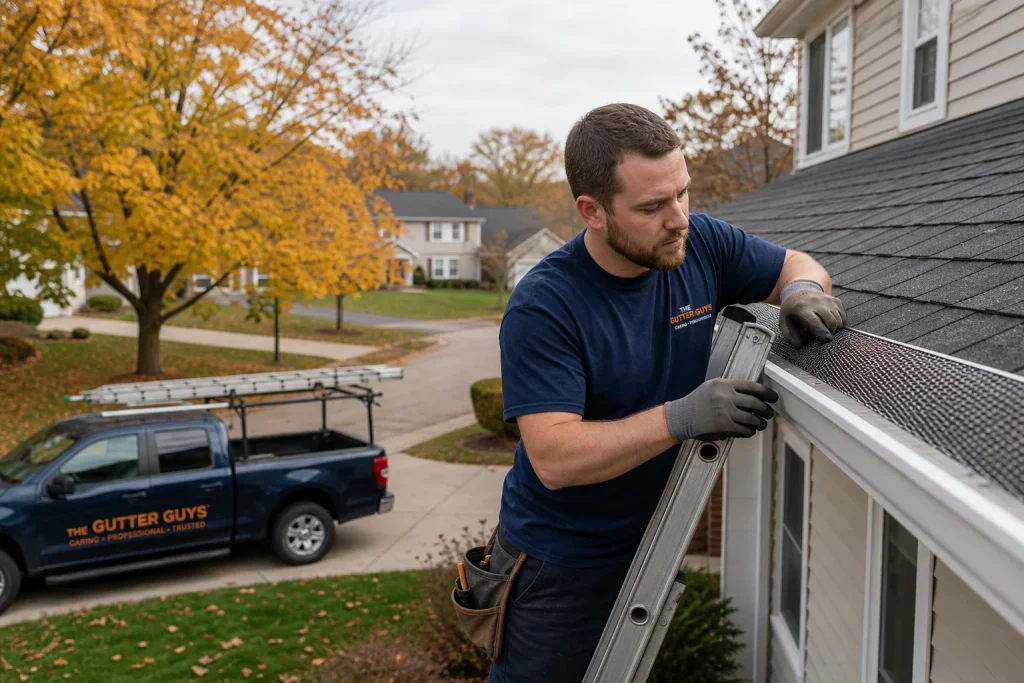
Stainless steel micro mesh gutter guard installation is one of the smartest upgrades a homeowner can make to keep water damage away from their foundation and siding. A properly installed stainless steel micro-mesh gutter system blocks leaves, shingle grit, and roof debris while letting rainwater flow through freely. Gutter Guard Installation from a trained crew ensures long-term performance from day one.
By The Gutter Guys Team, Gutter Installation Experts
Not all gutter guards are built the same. Foam inserts, plastic screens, and reverse-curve systems each have trade-offs, but stainless steel micro-mesh gutter guards consistently rank highest on longevity, filtration, and low maintenance requirements.
The key is the filter layer itself. A steel micro-mesh screen has openings small enough to stop the majority of debris that clogs gutters, including shingle grit from the roof, seed pods, and fine organic particles. Other materials like plastic mesh stretch and warp over time, while stainless steel holds its shape through freeze-thaw cycles and Midwest summers without degrading.
Longevity and Corrosion Resistance
Stainless steel does not corrode the way standard steel or lesser alloys can over years of outdoor exposure. That matters in the Midwest, where gutters handle everything from spring downpours to winter ice buildup. A stainless steel micro-mesh gutter guard installed correctly can last 20 or more years without needing replacement.
How Water Moves Through the Mesh
Quality micro-mesh gutter guards rely on surface tension and gravity working together. Water molecules cling to the stainless steel fibers and pull into the gutter channel below, while solid debris sits on top, dries out between rain events, and blows off naturally. This is how a well-designed stainless steel micro-mesh gutter system keeps gutters flowing freely even during heavy leaf fall seasons.
What to Know Before Installation Starts
Before any gutter guard goes up, existing gutters need to be in solid shape. A stainless steel micro-mesh gutter guard performs best when seated on straight, properly pitched gutters that are clean and free of standing water.
Here is what the pre-installation checklist covers:
Gutter cleaning and inspection. All debris must be removed before installation begins. If gutters are packed with leaves or decomposing seed matter, that material will sit below the guards and cause drainage problems. Gutter Cleaning is the right first step before any guard goes in.
Pitch verification. Gutters need a consistent slope toward the downspouts so water flows in the correct direction. Sagging or level sections get corrected before guards are installed.
Fascia and bracket condition. Guards mount to the front lip of the gutter or tuck under the first course of shingles. Rotted fascia boards need to be replaced first so mounting points are stable and the guard stays secure over time.
Roof type assessment. Stainless steel micro-mesh gutter guards work on most rooflines, but the installation method adjusts based on roof type. On a metal roof, the standard underlap method changes because there is no raised shingle edge to slide under. On a flat roof or low-pitch section, riser brackets are sometimes needed so water still flows toward the gutter opening rather than sheeting across the guard surface.
For homeowners comparing gutter guard materials before committing, aluminum is the most common alternative worth a look, and our aluminum gutter guard installation breakdown covers how it compares on cost and durability. For the finest debris filtration over the long term, stainless steel micro-mesh gutter guards come out ahead.
The Step-by-Step Installation Process
Once gutters are cleaned and prepped, stainless steel micro mesh gutter guard installation follows a consistent sequence. Here is how a professional crew handles it.
Step 1: Measure and cut sections to length. Each guard section is measured to fit the gutter run it will cover. Guards are cut on-site with tin snips or a dedicated cutter. Precise cuts prevent gaps at seams where debris could enter.
Step 2: Slide the back edge under the first shingle course. On standard asphalt roofs, the back flange of the guard slides gently under the lowest row of shingles and rests against the gutter back wall. This creates a weather-resistant seal without penetrating the roofing material.
Step 3: Hook the front edge over the gutter lip. The front of the guard snaps or folds over the gutter front lip. Many installers add screws for extra security on long runs or in wind-prone areas.
Step 4: Install end caps and miters at corners. Gutter ends and corners receive caps to block debris from entering at the edges. Properly fitted end caps separate professional installation from DIY work since loose caps are among the most common entry points for debris.
Step 5: Run a water flow test. Once all sections are secured, a water test confirms that flow is passing through the micro-mesh and into the gutter channel correctly, with no pooling on top of the guard.
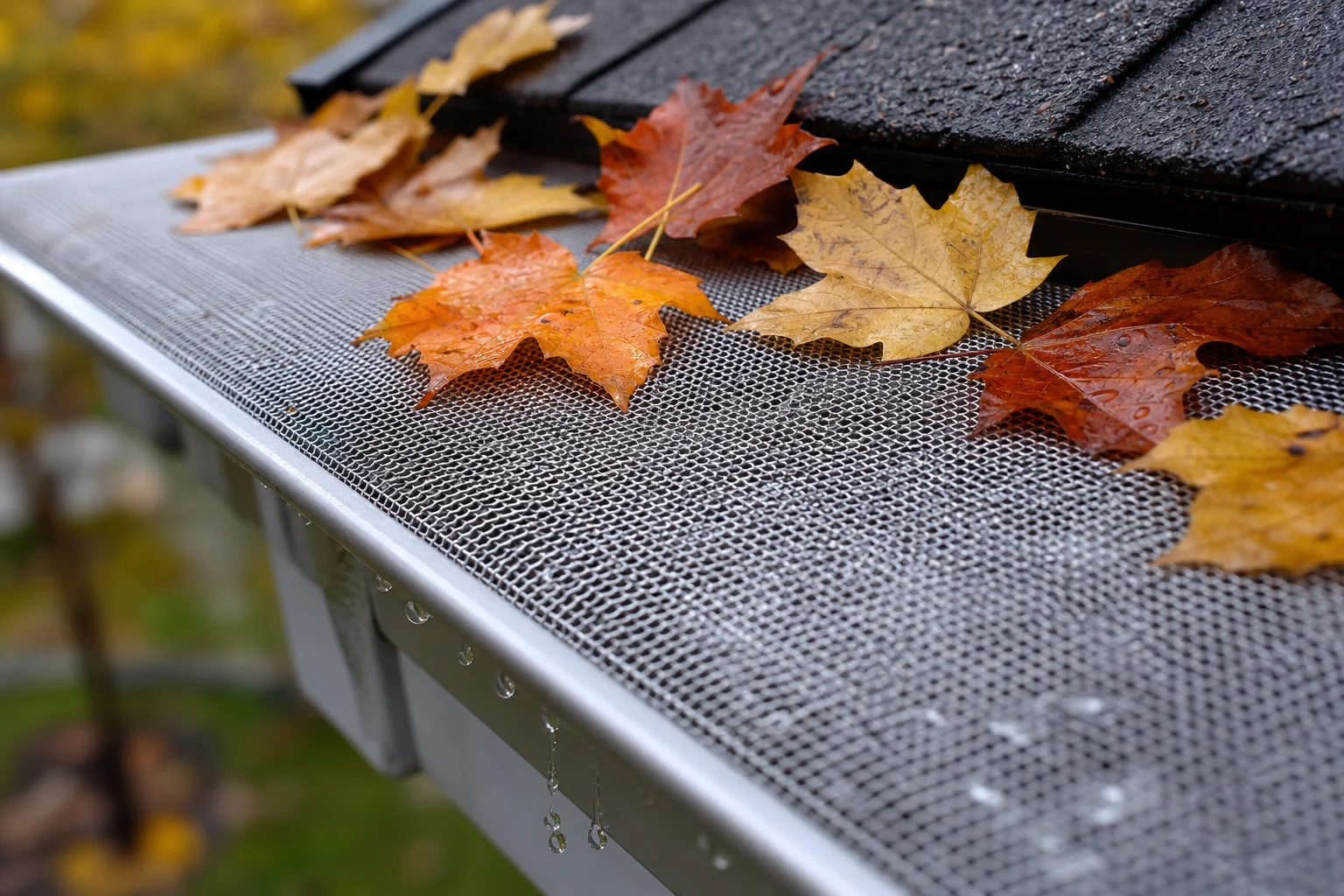
For rooflines with valleys, dormers, or sections that include a flat roof area, a trained crew handles each variation without guesswork.
Special Roofing Situations: Metal Roofs and Low-Pitch Sections
Most installation guides assume a standard asphalt shingle roof, but Midwest homes often have standing seam metal panels, corrugated steel sections, or low-pitch areas over garages and additions.
On a metal roof, the standard back-flange underlap method does not apply because metal panels have no raised shingle edge to slide under. Instead, installers use a clip system that fastens to the gutter front lip, holding the guard securely without contacting the metal roof surface. This protects existing metal roof warranties while still delivering a tight, reliable installation.
On a flat roof or very low-pitch section, water tends to sheet across the surface rather than run in a defined channel toward the gutter. Stainless steel micro-mesh gutter guards on these sections benefit from riser brackets that tilt the guard slightly so water flows into the gutter opening rather than running past it.
Homes in storm-prone areas often need a reinforced guard setup, since hail, high winds, and heavy debris loads put more stress on standard mesh and mounting hardware than typical seasonal conditions do. Ask your installer about reinforcement options if storm exposure is a concern for your home.
Maintenance After Stainless Steel Micro Mesh Gutter Guard Installation
A stainless steel micro-mesh gutter guard system is low-maintenance, not zero-maintenance. Here is what ongoing care looks like after gutter guards are installed.
Annual rinse. Once a year, a rinse from a garden hose removes fine shingle grit and any surface residue that has accumulated on the mesh. This takes about 15 minutes on a standard home and keeps water flow unrestricted.
Post-storm visual check. High wind events can occasionally displace a guard section at a seam or end cap. A quick visual walk around the home after a significant storm lets you spot anything that needs to be reset before the next rain arrives.
Downspout flush each season. Even with gutter guards installed, confirming that downspouts are flowing freely each spring and fall is good practice. A quick flush with a garden hose confirms nothing is trapped below the guard system.
Homeowners researching different mesh guard products will find it useful to compare real-world performance across brands. Our AllMeshPro gutter guard installation breakdown covers one specific mesh system and how it compares on day-to-day maintenance requirements.
When you visit our website to schedule service or request information, you may see a cookies policy notice on the site. Like most local business websites, we use basic analytics to understand how visitors reach us. Accepting or adjusting those settings does not affect your ability to contact our crew or request a quote.
Frequently Asked Questions
Does stainless steel micro mesh gutter guard installation work on all gutter sizes?
Most stainless steel micro-mesh gutter guard systems are designed for standard 5-inch and 6-inch K-style gutters, which cover the majority of residential homes. Some products also accommodate half-round gutters. A professional installer confirms compatibility before ordering materials so the fit is correct from the first section installed.
How long does micro mesh gutter guard installation take on a typical home?
On a standard single-story home with a straightforward roofline, a trained crew can complete installation in a few hours. Two-story homes, long gutter runs, or rooflines with multiple valleys and dormers will take longer. Your installer will give you a realistic time estimate after reviewing the site.
Do stainless steel micro-mesh guards hold up through Midwest winters?
Yes. Quality stainless steel micro-mesh gutter guards are built to handle the weight of snow and ice that collects during Midwest winters. The steel frame resists bending under load, and the mesh does not crack or become brittle from temperature swings. Ice dams are a separate roof issue, but the guards perform well through freeze-thaw cycles.
Will gutter guards mean I never need to clean gutters again?
Stainless steel micro-mesh gutter guards reduce how often cleaning is needed, but some maintenance is still part of ownership. Fine debris, shingle grit, and organic matter can collect on the mesh surface over time. Most homeowners shift from multiple cleanings per year to a single annual rinse, which is a significant reduction in ongoing effort and cost.
How do I know if my gutters are ready for gutter guard installation?
Gutters should be clean, properly pitched, and free of damage before guards go in. If sections are sagging, pulling away from the fascia, or have cracks and holes, those need to be addressed first. A professional assessment will tell you whether existing gutters are in good enough shape or whether repairs should come first.
Get Your Home Protected With The Gutter Guys
The Gutter Guys team handles stainless steel micro mesh gutter guard installation for homeowners across the region, from straightforward single-story homes to complex rooflines that include metal roof sections and low-pitch flat roof areas. Get a clear, no-pressure assessment from our crew today. Contact us to schedule a walkthrough.