

Water stains on fascia usually trace back to gutters that overflow or sit wrong, or to a leak higher up the roof. Streaks right behind the gutter often call for gutter replacement, while soft wood near the top of the fascia, at the rafter ends or in the soffit, along with damp insulation, points to the roof. Here is how to tell which one you have.
By The Gutter Guys Team, Gutter Installation Experts
| What you see | Likely a gutter problem | Likely a roof problem |
|---|---|---|
| Where the stain sits | Top of the fascia right behind the gutter, or under seams and corners | Spread along the roofline, often with ceiling marks inside |
| Stain pattern | Vertical streaks below overflow points and downspout outlets | Brown rings or patches that grow after heavy rain |
| Wood condition | Soft along the bottom edge or behind the gutter | Soft near the top, at rafter ends, or in the soffit boards |
| Roof space check | Dry insulation, wet fascia | Damp insulation, daylight, or stained rafters |
| Who looks first | A gutter company | A roofer |
Why Do I Have Water Stains on Fascia?
Fascia is the long board that runs along your roof edges and carries the gutters. It works like connective tissue between the rafter ends and the gutter, so it takes every drip, splash, and overflow. When that wood stays wet, a dark stain shows first, then peeling paint, then rot (wood decay caused by fungus feeding on moisture). Fascia boards rot because they stay wet and cannot dry out. Fascia damage rarely starts as one big event; it builds from small leaks and repeated moisture.
Water stains on fascia usually come from one of five sources:
- Clogged gutters. Leaves, shingle grit, and other debris block the flow, so water spills over the edges or backs up behind the gutter.
- Leaking seams and cracks. Joints open over time, and freeze and thaw cycles in Kansas City and Michigan widen the cracks every winter. Small leaks at those seams keep the fascia boards wet.
- Blocked downspouts. A plugged downspout sends water back up the run and onto the roofline.
- A gap at the roof edge. Rain slides behind the gutter instead of dropping into it.
- Roof leaks or attic condensation. Poor ventilation lets warm, moist attic air condense on the soffit (the panel under the roof overhang) and the fascia, which feeds mildew and mold. Good roof ventilation keeps that moisture moving out.
Is Stained Fascia a Gutter Problem or a Roof Problem?
Stained fascia is a gutter problem when the water starts at or below the roof edge, and a roof problem when it starts above it. Three quick checks sort out most cases.
Watch during rainfall. Stand on the ground and watch steady rain hit the gutter runs. Water pouring over the front lip points to gutter overflow. Water sliding down behind the gutter points to a gap at the roof edge. Never climb a wet ladder to get a closer look.
Check for soft wood. Press a screwdriver tip into the board near the bottom and near the top. Firm wood is sound. Soft or crumbly wood has rot. Softness along the upper edges of the fascia boards or in the soffit boards suggests water is coming from above.
Look for pests or mold. Black or green mildew, mold spots, and insect activity show the wood has held moisture for a while. Carpenter ants often go for damp wood.
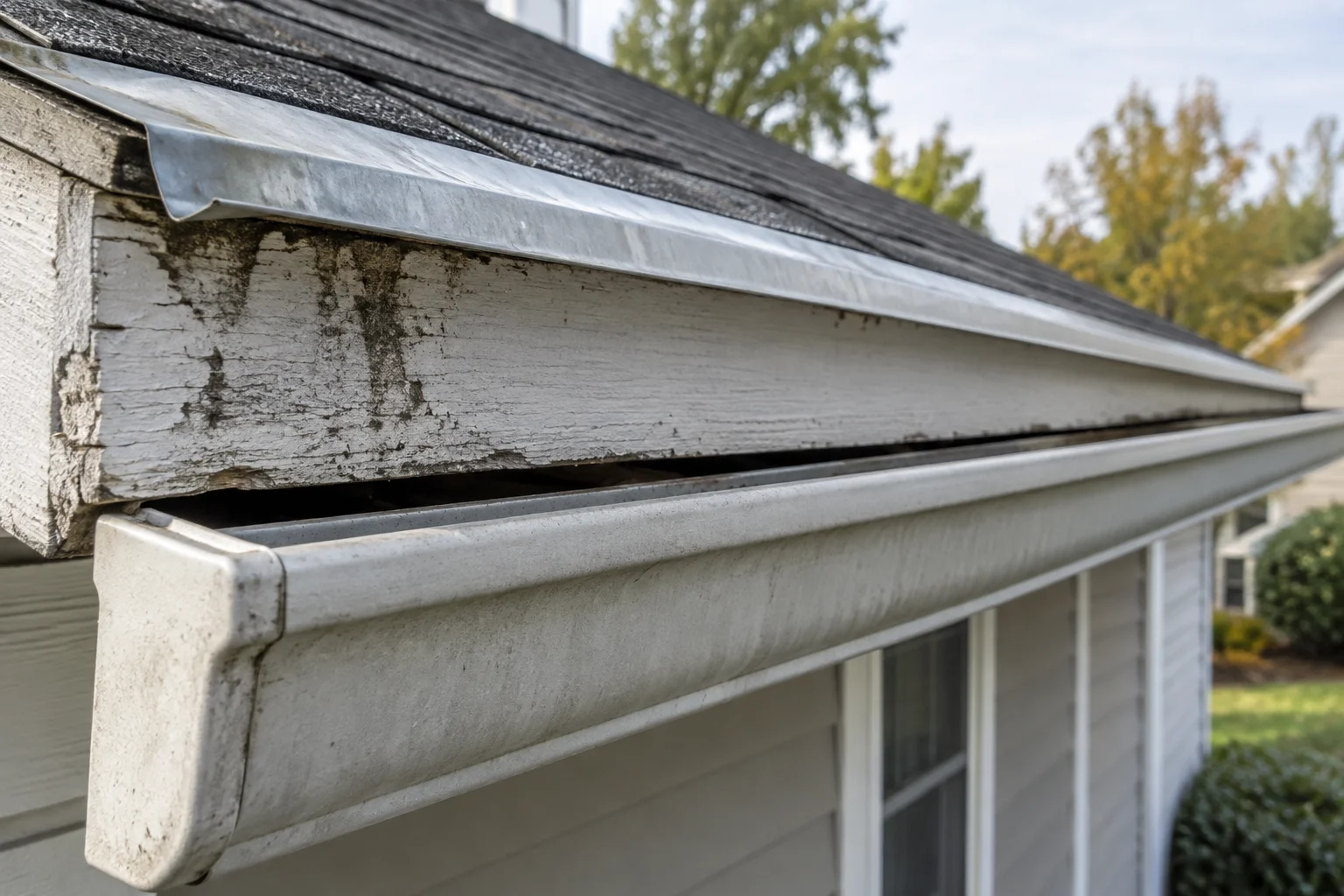
What causes a gap between drip edge and gutter?
A drip edge is the L-shaped metal strip along the roof edge that guides water off the shingles. A gap between drip edge and gutter lets water run behind the gutter and soak the fascia. It is also the usual answer to why water gets between gutters and fascia. Common causes:
- The gutter hangs too low or has pulled away from the fascia because of loose hangers, heavy debris, or ice.
- The drip edge is cut too short, so water lands behind the gutter.
- New gutters went up without adjusting the old flashing.
- Warped fascia boards push the gutter out of line.
Repairs for these usually mean resetting hangers or extending the flashing, and the gap should be closed before any paint goes on.
Gutter apron vs drip edge: which one do you need?
Both are metal flashing, and both move water away from the wood. A drip edge sits at the edge of the roof deck and kicks water off the shingles. A gutter apron is a longer, bent piece that tucks under the shingles and bridges the space over the back of the gutter. A drip edge belongs along all roof edges, though older homes often lack one. An apron is the add-on for homes where the gutter sits far enough from the roofline that water could slip behind it.
What are the signs of a drip edge installed wrong?
A drip edge installed wrong often stays hidden until a heavy rain, when it leaks water behind the gutter. Look for these clues:
- Stains along the top of the fascia, hidden behind the gutter.
- No metal visible at the roof edge, or shingles drooping past it.
- Metal that stops short, so water drops behind the gutter.
- Rust streaks or lifted sections.
- Peeling paint on the upper board while the lower board looks fine.
How Serious Is Fascia Water Damage and When Does It Need Repair?
Fascia water damage is slow, but it spreads. Wet fascia damages the soffit, the rafter ends, and the hangers that hold the gutters. Because the hangers screw into the board, rotten wood lets the runs sag, and sagging runs overflow more. Moisture damages the wood from within, and a slow leak damages hidden layers long before paint peels. Water damage does not go away on its own. A stain may fade while the rot underneath keeps growing. Left alone, rot damages the roofline too. Catching fascia damage early keeps repairs small.
| Stage | What you see | What it usually needs |
|---|---|---|
| Surface stain | Dark streaks on sound wood | Fix the water source, then clean and repaint |
| Soft spots | Spongy wood, cracks, peeling paint | Replace the affected section of board |
| Widespread rot | Crumbling board, damaged soffit boards, mold | Replace boards and check rafter ends, ventilation, and the roof space |
Are water stains on fascia always a sign of rot?
No. Dirt runoff and mildew can stain solid wood. Test it with the screwdriver. A stain on firm, dry wood is a warning to find the water source, not proof the board is lost. Firm wood usually needs only cleaning and repairs to the water path, while soft wood needs replacements. Repeated dark rings in one spot, or peeling paint over soft wood, usually mean rot has started.
Can stained fascia be cleaned or painted over?
Yes, when the wood is sound and dry. Wash it with mild soap and a soft brush, rinse gently, and let it dry fully. Fix the source of the moisture first. Painting over wet or soft wood traps moisture inside, and the peeling paint can return within a season or two.
Does a Roof Leak Cause Fascia Water Damage?
Yes, it can. A leak at failed flashing, cracks in old flashing or sealant, cracked or missing shingles, or an ice dam can send water down the underside of the roof deck to the rafter ends. From there it soaks the fascia and soffit from the inside. Michigan winters make this common, since ice dams push meltwater up under the shingles.
What does water damage look like on a roof? Watch for brown rings on ceilings, damp insulation under the roof, daylight through the deck, curling or missing shingles, and dark streaks. If you see any of these, have a roofer do an inspection before you spend money on gutter work. A full inspection should also cover roof ventilation, because blocked vents hold moisture under the deck.
Will insurance cover it? Policies differ, and many treat sudden storm damage differently from slow wear. Photograph the damage and call your insurer before any repairs begin.
Who Should Fix Fascia Water Damage, a Roofer or a Gutter Company?
Match the fix to where the water starts:
- Dry roof space, stain behind the gutter: a gutter company. The fix is usually gutter replacement, plus a check that the drip edge reaches the gutter.
- Overflow, sagging runs, or clogged gutters: a gutter company, with cleaning or guards to keep debris out.
- Damp insulation, ceiling stains, or failing shingles: a roofer first, since leaks like these start above the gutter.
- Soft or rotted board: a qualified tradesperson replaces it. Board replacements come before new gutters go back on.
- New roof on the way: order matters. The drip edge goes on with the roof and gutters hang after, so gutter and roof sequencing keeps the crews from undoing each other's work.
Our Verdict: Treat It as a Gutter Problem Until the Attic Says Otherwise
If your attic is dry and the stain sits right behind the gutter, treat it as a gutter problem. Plan replacements for runs that sag or leak, make sure the drip edge reaches the gutter, and add gutter protection so debris stops building up. Guards keep leaves out, but they will not fix a bad drip edge or a leaking roof. If the space under the roof is damp, a roofer goes first and gutter work comes second.
Not sure which side of that line your stain falls on? Reach out through our contact page to talk through gutter replacement or gutter protection, and have a roofer inspect the roof if the water seems to be coming from above.
Get Your Stained Fascia Looked At Before Winter
Tell us where the stains sit and what the gutters do in the rain, and we will help you work out whether they are the cause. Start on our contact page.