
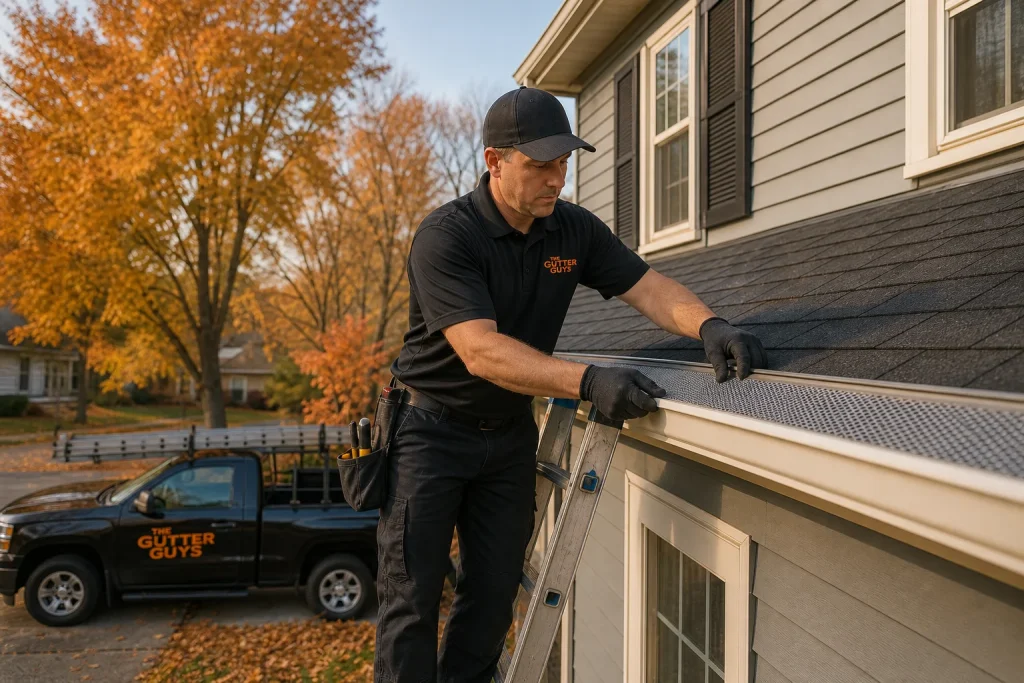
Aluminum gutter guard installation is one of the most practical upgrades Midwest homeowners can make to protect their home from water damage. The right aluminum gutter guards keep debris out, let water flow freely, and last decades with minimal upkeep. This guide covers what to expect from the process, start to finish.
Why Aluminum Gutter Guards Are Worth the Investment
Aluminum gutter guards have earned their place as the go-to choice for durable, low-maintenance gutter protection. Unlike plastic alternatives, aluminum resists warping, cracking, and UV degradation. A well-installed gutter guard will function properly through decades of Midwest freeze-thaw cycles, heavy spring rains, and dry summer heat without losing shape or performance.
The key structural advantage is rigidity with low weight. Aluminum gutter guards are stiff enough to bear the weight of ice and debris without bending, yet light enough that they do not stress the gutter system itself. That balance means your gutters hold their slope over time, keeping water flowing toward the downspouts where it belongs.
Aluminum is also naturally corrosion-resistant. Galvanized steel gutter guards offer similar durability, but steel can rust at cut edges or seams if the protective coating is scratched or compromised. Aluminum gutter guards sidestep that problem entirely, requiring less inspection over time.
One more practical benefit: aluminum gutter guards save time on seasonal maintenance by dramatically reducing how often you need to clean gutters. Homeowners who previously spent weekends on a ladder every fall often find that a simple hose rinse once a year is all that is needed.
How Aluminum Gutter Guard Installation Works
Understanding the installation process helps you know what to expect when the crew arrives. Here is a step-by-step overview of how professional aluminum gutter guard installation typically goes.
Step 1: Gutter Inspection and Cleaning
Before any guard goes on, the technician removes all debris from the gutter system. Leaves, twigs, shingle grit, and standing buildup are cleared out completely. Starting with clean gutters is essential because guards installed over a dirty system permanently trap debris inside, where it causes rot and blocks water flow.
This step also includes a check for sagging sections, leaky seams, or damaged downspouts. Any issues with the gutter system are addressed before installation continues. Make sure your installer walks you through every finding before work begins.
Step 2: Measuring and Cutting
Aluminum gutter guards are cut to match the exact length of each gutter run. Most products come in standard sections, but a professional crew cuts pieces to fit corners, mitered joints, and non-standard roofline angles. Taking the necessary necessary precautions at this stage, including confirming gutter slope and checking for rust spots, prevents bigger problems after the guard is installed.
Step 3: Fitting and Securing
Depending on the guard style, panels are snapped into the front lip of the gutter, slid under the bottom row of roof shingles, or fastened with screws. The fastening method affects how well the guard holds during high winds. A properly secured aluminum gutter guard stays flat and sealed through storm season without lifting or shifting.
Step 4: Final Flow Check
After installation, the technician runs water through the system to confirm flow. Water should move freely from the roof surface through the guards and out the downspouts without pooling or backing up under the shingles. Many installers will share a short video of this test so you can see the results for yourself before they leave.
Types of Aluminum Gutter Guards
Not all aluminum gutter guards are built the same. Here are the main styles and what each one handles best.
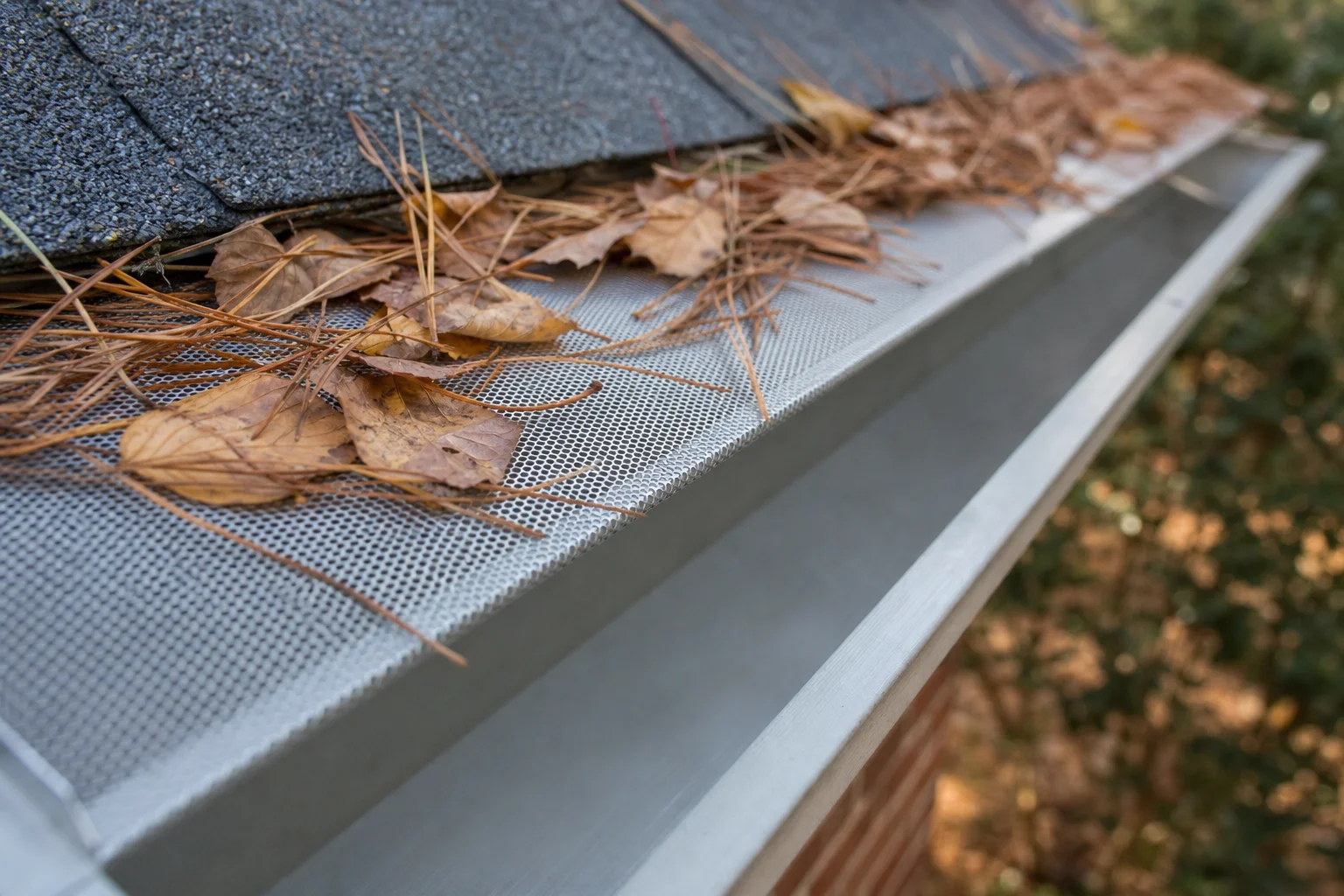
Micro-mesh aluminum guards use a fine mesh stretched over a solid aluminum frame. They block pine needles, shingle grit, and small debris while allowing water to pass through at a high flow rate. This is the top choice for homes surrounded by pine trees or homes with heavy leaf canopies above the roofline.
Perforated aluminum guards have a solid aluminum panel with small holes punched through. They handle leaves twigs and larger debris well but may let pine needles slip through over time. These work well on open lots with fewer trees close to the home.
Reverse curve guards use surface tension to guide water into the gutter while debris falls off the nose. They can struggle with heavy rainfall because water overshoots the curve. They work best in areas with moderate rain totals and lighter debris loads.
Foam and brush inserts are not aluminum products and are not recommended for long-term use. They degrade quickly and tend to trap debris inside the gutter rather than shedding it off the cover.
For most Midwest homes, micro-mesh aluminum gutter guards provide the best combination of debris rejection, water flow capacity, and long-term durability. Learn more about your options on our gutter guard installation services page.
Keeping Your Gutter System Running Right
Even the best aluminum gutter guards need occasional attention to function properly. Here is a simple maintenance routine to keep your gutter system in good shape year after year.
Twice-a-year visual checks. Walk the perimeter of your home in late fall and early spring. Look for debris sitting on top of the guards and check that no sections have lifted away from the gutter lip. A garden hose rinse is usually enough to clear surface buildup between professional visits.
Downspout confirmation. Clogged downspouts are one of the most common causes of water damage in homes with otherwise functional gutters. Once a year, confirm that water moves freely from the bottom of each downspout away from the foundation.
After major storms. High winds can deposit branches and large debris on the roof that slides down and rests on top of the guards. After a significant storm, check that nothing is blocking the guard surface and that all sections are still seated correctly.
Professional gutter cleaning services are still a worthwhile investment even with guards in place. Most homeowners with aluminum gutter guards find that a professional visit every two to three years is enough to keep everything flowing and prevent water damage from becoming a costly repair.
Aluminum vs. Steel Gutter Guards: A Quick Comparison
Both aluminum gutter guards and steel gutter guards deliver solid performance, but they differ in a few important ways.
Aluminum is lighter, making it easier to handle during installation and less taxing on older gutter hangers and fascia boards. It is corrosion-resistant without any additional coating, which reduces long-term care requirements. Cut edges stay clean and do not develop rust over time.
Steel gutter guards, typically galvanized or stainless, are heavier and more rigid. They hold up well under heavy snow load and are harder to dent. However, steel costs more and cut edges can develop rust if the protective coating is scratched. Steel also requires more care during installation to prevent galvanic corrosion when it contacts aluminum gutters directly.
For most residential applications, aluminum gutter guards offer the better combination of durability, affordability, and ease of installation. Steel makes more sense for large commercial buildings or homes in coastal areas where salt air is a consistent factor.
A quick note about our website: we use cookies cookies as part of standard site operation to improve your experience, and we never share your personal information with outside parties.
Frequently Asked Questions
How long do aluminum gutter guards last?
Quality aluminum gutter guards typically last 20 years or more with basic maintenance. The material resists corrosion, UV exposure, and temperature swings well. Most manufacturers back their products with 15 to 25 year warranties, which reflects real-world longevity data rather than just a marketing claim.
Can I install aluminum gutter guards myself?
DIY installation is possible on single-story homes with accessible gutters, but getting the fit, pitch, and fastening method right requires experience. An improperly installed gutter guard can redirect water behind the gutter or lift during storms. Professional installation is the safer route to make sure the system performs as designed from day one.
Will aluminum gutter guards handle pine needles?
Standard perforated aluminum guards can let pine needles slip through because the needles are thin. Micro-mesh aluminum gutter guards are specifically designed to stop pine needles while still letting water flow freely. If you have pine trees near your home, micro-mesh is the right choice for long-term performance.
Do gutter guards eliminate all cleaning?
No. Gutter guards significantly reduce how often you need to clean gutters, but occasional inspection is still needed. Shingle grit and very fine debris can accumulate on the guard surface over time. Expect a professional check every two to three years to make sure everything continues to function properly.
How is gutter guard installation priced?
Pricing depends on the linear footage of your gutters, the guard style selected, and roof accessibility. Most homeowners get the best accuracy from an on-site assessment. Contact your local gutter professional for a no-pressure quote based on your home's specific gutter system.
Protecting your home starts at the roofline. If you are ready to stop dealing with clogs and prevent water damage before it starts, contact The Gutter Guys today for a straightforward assessment and quote.