
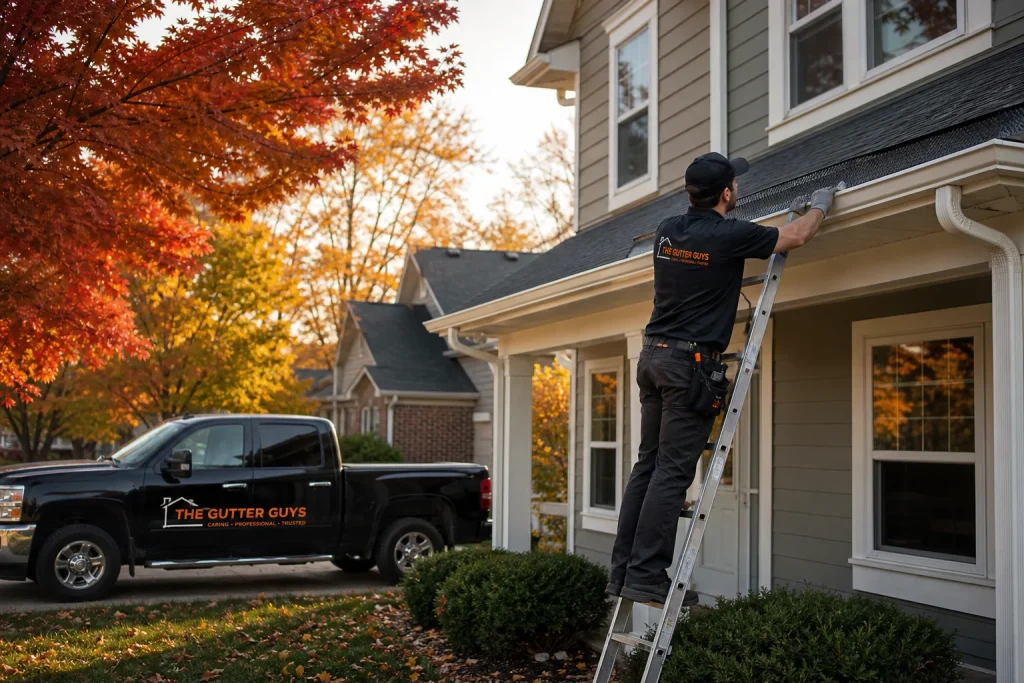
Fall preparation for your home starts at the roofline, where clogged gutters trap wet leaves and invite ice dams before winter ever arrives. Professional Gutter Guard Installation keeps water moving off your roof all season, so your Midwest home stays protected through the toughest months ahead.
By The Gutter Guys Team, Gutter Installation Experts
Why Fall Preparation Starts With Your Gutters
As the autumnal equinox arrives each September, the days grow noticeably shorter and cooler humid weather settles across the Midwest. Falling leaves from oak, maple, and elm trees pile up fast during this time year, and gutters that aren't ready for the season fill with organic matter within a matter of weeks. That buildup traps moisture against your fascia and roofline exactly when temperatures start to drop toward freezing.
Fall preparation means getting ahead of that buildup before it becomes a problem. Homeowners who schedule Gutter Cleaning in late August or early September, before the heaviest leaf drop hits in October, avoid the frantic scramble that comes with the first hard freeze. Waiting until November often means working around ice, and nobody wants to be on a ladder once the humid weather turns to genuine cold.
Signs Your Gutters Need Attention Before Autumn
Before the leaves start falling in earnest, walk the perimeter of your home and look for warning signs. Sagging sections, visible rust, or gutters pulling away from the fascia all signal it's time to get ready for the season ahead. A gutter system in good repair should handle a full span of autumn storms without overflowing onto the garden beds below.
Pay attention to water stains on siding, pooling near the foundation, or a musty smell after rain, especially at night when temperatures drop and condensation lingers longer. These are the moments homeowners who've loved their house for years start noticing wear they'd normally miss, and catching it now saves a much bigger repair once winter sets in.
A quick walk-around checklist helps: check for gutters pulling away from the roofline, look for granules from asphalt shingles collecting in the trough, and confirm downspouts drain several feet away from your foundation instead of pooling against it. None of this takes more than fifteen minutes, and it tells you exactly where fall preparation needs to focus first.
How Leaf Guard Installation Protects Your Home Through Winter
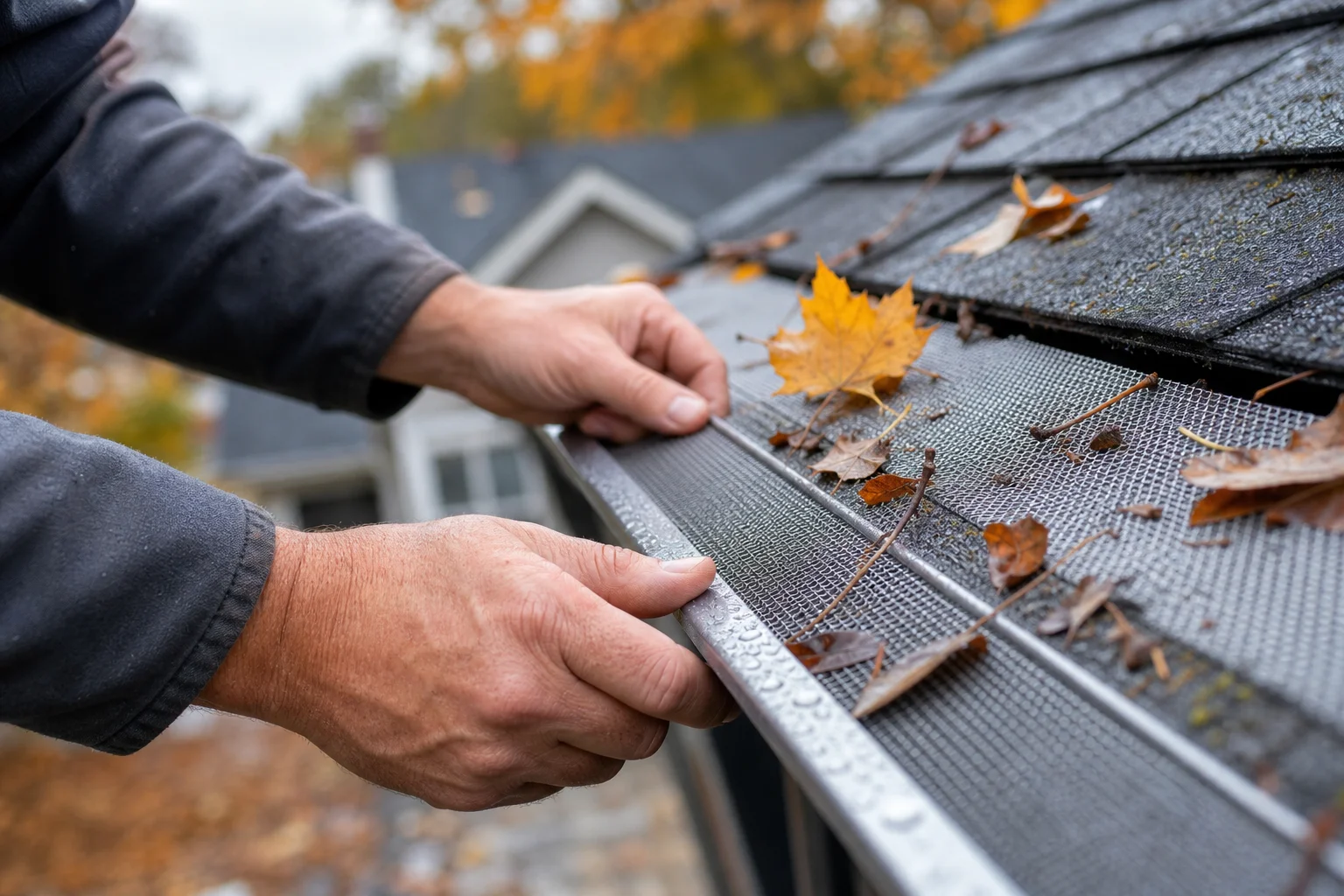
A properly installed leaf guard system does the heavy lifting so you don't have to. Instead of climbing a ladder every few weeks between August and the first snowfall, a mesh or reverse curve guard lets rain through while keeping leaves, twigs, and organic matter out. Reverse curve designs use surface tension to pull water down and around the guard while leaves and twigs slide off the front edge instead of settling on top, which is what lets them handle heavy runoff without clogging, a detail worth understanding if you're comparing reverse curve gutter guard installation against mesh options.
Leaf guards keep your gutters ready, colder weather included, straight through winter and into spring. By the time March arrives and the thaw begins, your gutters are already clear and functioning instead of packed with frozen debris. Homeowners who install guards before the season starts typically don't touch a ladder again until next spring, when a quick inspection confirms everything is holding up.
Turning Fall Cleanup Into Garden Soil Health
The leaves your leaf guard keeps out of your gutters don't have to go to waste. Many Midwest homeowners rake that organic matter straight into garden beds, where it breaks down over the colder months and feeds garden soil ahead of next year's planting. Shredded leaves make an excellent mulch layer for a vegetable garden, holding moisture and moderating soil temperature as the ground freezes and thaws.
If you want to prepare garden beds ahead of next spring, this time year is ideal for working leaf litter into the soil. Doing so supports soil health by adding nutrients naturally, and it keeps yard waste out of the landfill. Just make sure whatever debris comes off your roof and out of your gutters gets composted or tilled in, rather than left in a soggy pile against your foundation where it can hold moisture against your siding.
Choosing the Right Leaf Guard System for Your Home
Not every leaf guard is built the same, and the right choice depends on your roofline, tree coverage, and local weather patterns. Guards matter in the first place because they stop leaves and twigs from packing into your gutters, which is what causes the trapped moisture and ice dam risk described earlier in this article. Homeowners dealing with frequent Midwest storms often look to heavy duty gutter guard installation for a system built to handle heavier runoff.
Material matters too. Aluminum is a popular choice for a durable guard since the metal resists rust and holds up well over years of exposure, which matters when you're investing in long-term protection rather than a quick fix. Some homeowners try to patch their original gutters with store-bought screens first, only to find those thin covers sag or blow off in the first strong storm. Whatever style fits your home, professional installation ensures the guards are pitched and fastened correctly, since a poorly installed guard can do more harm than a clogged gutter.
Frequently Asked Questions
When is the best time for fall preparation with leaf guards?
Late summer through early September is ideal, before leaves start dropping in earnest. Scheduling fall preparation early means your gutters are protected before the heaviest debris hits in October, and it avoids the rush that comes once cooler humid weather and shorter days arrive across the Midwest.
How long does leaf guard installation take?
Most homes are completed in a single day, depending on roofline length and gutter condition. A trained crew measures, cuts, and fastens guards to your existing gutters without removing them, so there's minimal disruption to your property and no need to reschedule other fall projects.
Can leaf guards handle heavy Midwest storms?
Yes. Quality leaf guard systems, including heavy duty and reverse curve designs, are built to shed high volumes of rainwater while still blocking leaves and debris. The right system depends on your tree coverage and typical storm intensity, which a professional assessment can confirm.
Do leaf guards eliminate gutter cleaning completely?
Leaf guards dramatically reduce how often you need to clean your gutters, but they don't eliminate maintenance entirely. Fine silt, seed pods, and shingle grit can still accumulate over time, so an occasional inspection keeps your system working the way it should.
Will leaf guards work with my existing gutters?
In most cases, yes. Leaf guards are designed to attach to standard K-style and half-round gutter profiles without replacing your existing gutters. A quick inspection during your free estimate confirms compatibility and flags any sections that need repair before installation begins.
Schedule Your Fall Preparation With The Gutter Guys
Don't wait for the first cold snap to find out your gutters aren't ready. Reach out to schedule fall preparation and leaf guard installation, and ask about long-term Gutter Protection before the leaves start falling this season.