
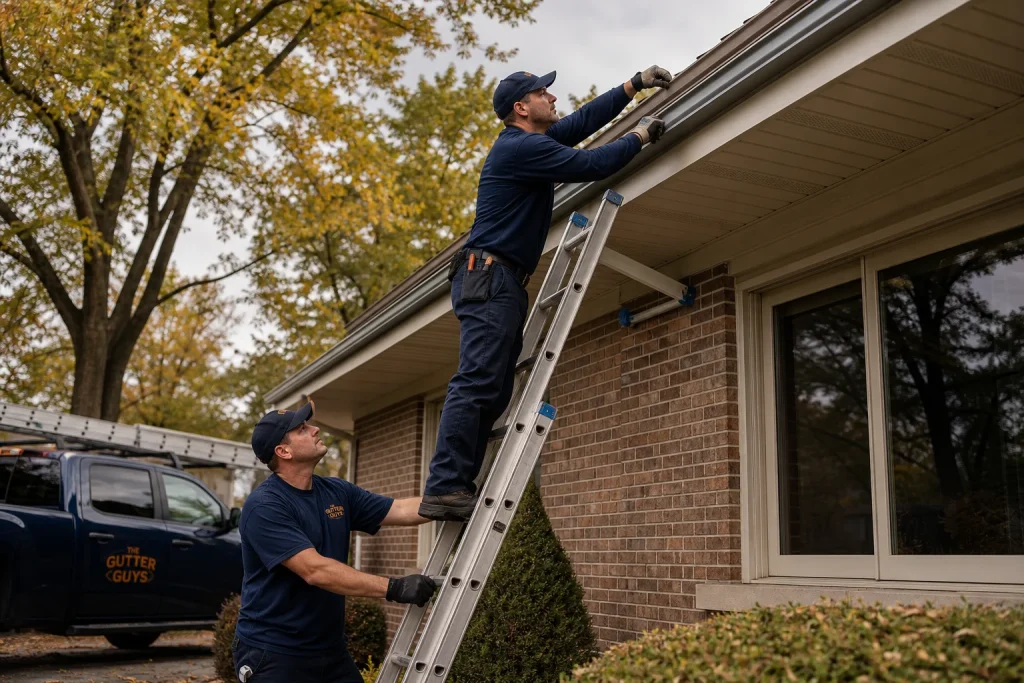
Reverse curve gutter guard installation uses surface tension to channel rainwater into your gutters while leaves and debris fall away from the edge, giving Midwest homeowners reliable Gutter Protection with far less maintenance. This guide explains how the technology works, what makes it effective, and what to expect when reverse curve gutter guards go on your home.
By The Gutter Guys Team, Gutter Installation Experts
How Surface Tension Drives Reverse Curve Performance
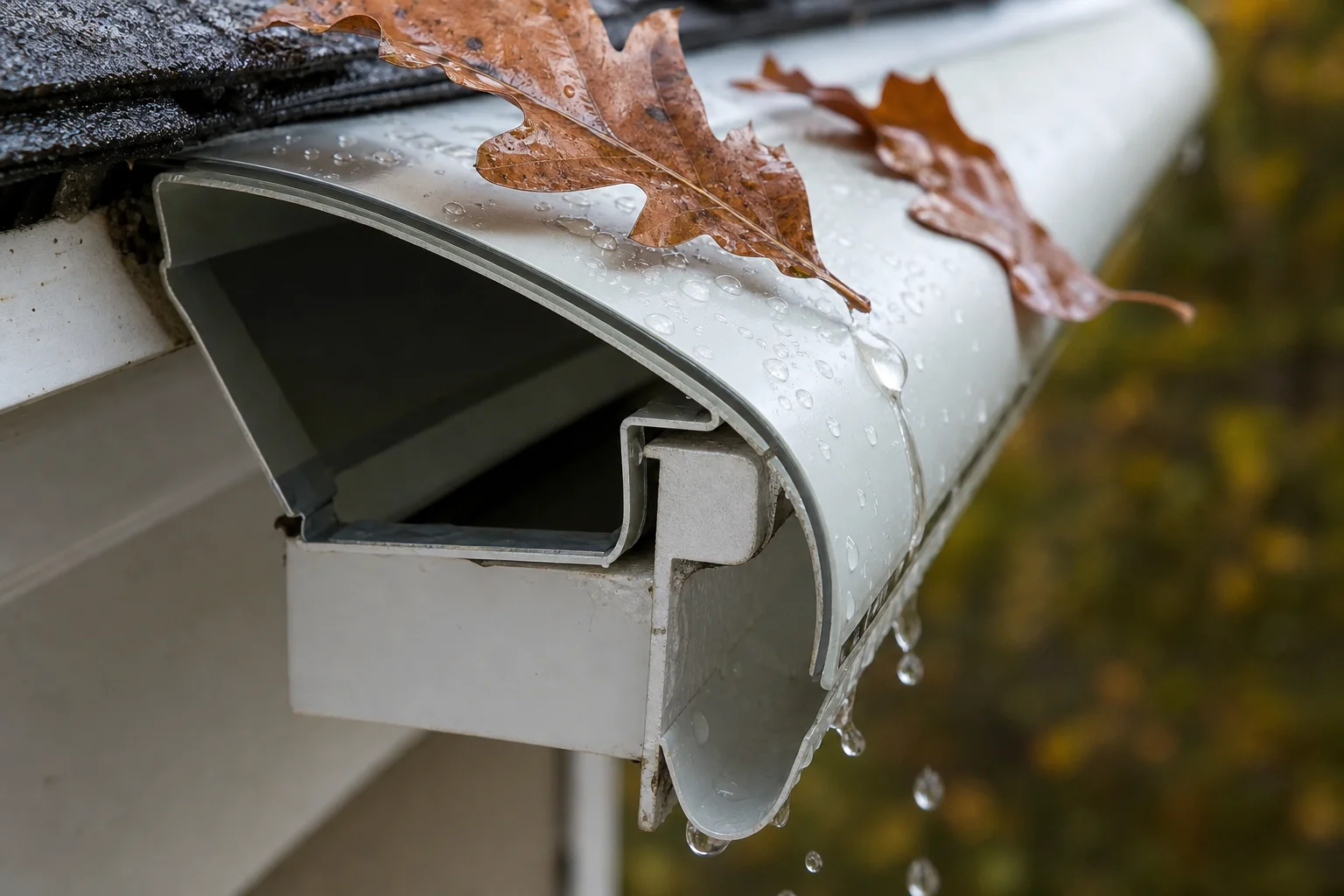
Surface tension is the physical principle that makes reverse curve gutter guards work. When water hits the curved outer lip of the guard, it clings to the surface and follows the curve downward into the gutter channel below. Leaves, twigs, and debris lack the weight and adhesion to follow the same path, so they slide off the front edge and fall to the ground instead.
This physics is the same reason water clings to the underside of a spoon held under a running faucet. In a reverse curve gutter guard, engineers shape that arc precisely so water flow stays attached through the turn and drops into the gutter rather than overshooting it.
Because the mechanism relies on physics rather than filtration, reverse curve gutter guards do not clog from the inside the way flat mesh or foam inserts can. The design keeps the gutter channel largely free of debris contact, which reduces the frequency of gutter cleaning over the life of the system.
The Anatomy of a Reverse Curve Gutter Guard
A standard reverse curve gutter guard is a rigid cover, usually made from aluminum or vinyl, that snaps or slides over the top of an existing gutter. The key feature is the leading edge: instead of a flat surface or a simple screen, the guard curves back toward the gutter opening in a smooth arc.
This curve gutter geometry creates a controlled water path. Rainwater flowing off the roof shingles hits the curved surface, wraps around the arc, and enters the gutter through a narrow slot at the back. The slot is sized to admit water but too narrow for most debris to fall through.
There are several variations on the curve gutter guard design sold under different brand names, but all share the same surface tension principle. Some feature a wider slot for high-volume rainfall areas; others use a tighter radius for finer debris control. A professional installer can match the right profile to your roof pitch, rainfall patterns, and surrounding tree cover.
What Debris Types Reverse Curve Guards Handle Well
Reverse curve gutter guards perform best with large, flat debris: oak leaves, maple seeds, shingle granules, and small twigs. This material lands on the outer face of the guard and gets carried off by wind or rain runoff before it can accumulate.
The harder challenge is pine needles and very small debris. Because pine needles are thin and stiff, they can bridge the slot opening and eventually work their way into the gutter over time. Homes surrounded by pine trees may still need periodic gutter cleaning even with reverse curve gutter guards installed.
Heavier or mixed debris loads sometimes call for a different guard profile than reverse curve, and homeowners dealing with dense tree cover can compare debris blockage solutions suited to tougher conditions.
Heavy rainfall events are another variable. During a downpour, water volume can exceed the guard's intake rate and sheet off the front edge rather than entering the gutter. This is typically resolved by selecting a guard profile rated for the rainfall intensity in your region. Homes in storm-prone areas may need a guard profile rated well above standard reverse curve flow rates; heavy duty storm protection covers those higher-capacity options in more depth.
The Reverse Curve Gutter Guard Installation Process
Reverse curve gutter guard installation follows a consistent sequence whether you are adding guards to existing gutters or pairing them with a brand-new gutter system.
Inspection and measurement. Before installing gutter guards, a technician walks the roofline to measure total linear footage, check gutter condition, and identify any sections with sagging, standing water, or rust. Installing a guard over a damaged gutter defeats the purpose of reliable gutter protection.
Gutter prep. The gutters must be completely clear before any guard goes on. A clean, dry channel gives water flow a straight path and prevents trapped debris from decomposing inside after the guard is sealed. Gutter cleaning is always part of the pre-installation prep, not an optional add-on.
Guard fitting. Reverse curve gutter guards are cut to length and fitted section by section. Depending on the product, they attach by sliding under the first course of shingles at the back and clipping to the gutter's outer lip at the front. No fasteners should penetrate the shingles themselves, which would void most roofing warranties.
Water testing. After all sections are installed, the crew tests water flow by running water along the roofline. They look for sheeting off the front edge, gaps at mitered corners, and any sections where the slot is misaligned with the gutter opening.
For full details on professional Gutter Guard Installation and what the service includes, the service page covers current scope. Homeowners with aluminum gutters already in place will find that most reverse curve guards are compatible without replacement. Matching guard material to gutter material generally extends the system's lifespan, since dissimilar metals can react with each other over time, so a professional installer typically confirms compatibility before the job begins.
What to Expect After Reverse Curve Guards Are Installed
Reverse curve gutter guards reduce maintenance significantly, but they do not eliminate it entirely. Most homeowners move from two or three gutter cleanings per year down to one light inspection annually, often in late spring after trees finish dropping seeds.
Water damage risk drops considerably once the gutters are protected because consistent water flow away from the foundation is the primary job of the gutter system. Overflowing or clogged gutters push water against the fascia board, into the soffit, and down the foundation wall. A well-fitted reverse curve gutter guard system protects not just the gutters but the structure of the home behind them.
After the first full year, most homeowners report the biggest payoff from reverse curve gutter guards is simply not thinking about the gutters. The system runs through spring rains, summer storms, and fall leaf drop, channeling water away from the home without constant attention.
Frequently Asked Questions
How does surface tension make reverse curve gutter guards work?
Surface tension causes water molecules to cling to solid surfaces. When rainwater hits the curved outer lip of a reverse curve gutter guard, it adheres to the arc and follows it into the gutter opening below. Leaves and debris are too rigid and light to trace the same path, so they fall off the front edge instead. The mechanism requires no power, no moving parts, and no filter media to replace or clean.
Do reverse curve gutter guards handle pine needles?
Pine needles are the most common debris that can slip past reverse curve gutter guards. Because they are thin and stiff, they can bridge the slot opening and gradually work into the gutter. Homes with heavy pine coverage may still need one annual inspection or light gutter cleaning. In heavily wooded yards, a fine-mesh guard may outperform a reverse curve design for fine debris control.
Will installing gutter guards affect my roof warranty?
Most reverse curve gutter guards install without penetrating the shingles. They slide under the first shingle course and clip to the gutter's front lip. A reputable installer confirms the attachment method before work begins. If fasteners are driven through shingles, that can affect your roofing warranty, so always ask how the product attaches before approving the job.
How long do reverse curve gutter guards last?
Aluminum reverse curve gutter guards typically last 20 years or more when properly installed and inspected periodically. Vinyl options cost less upfront but can become brittle in cold climates after 10 to 15 years. The condition of the underlying gutter usually determines the practical lifespan of the full system.
When is the best time for reverse curve gutter guard installation?
Spring is the most popular window. Gutters collect heavy winter debris, and homeowners want gutter protection in place before summer storms arrive. Installation can happen any season as long as the gutters are thoroughly cleaned and dry before the guard goes on.
Get Professional Reverse Curve Gutter Guards on Your Home
Reverse curve gutter guard installation is one of the most durable, low-maintenance choices for gutter protection available to Midwest homeowners, and the right system starts with an honest conversation about your home, your trees, and your rainfall. Reach out through our Contact page to schedule a free estimate and find out which system fits your home best.