
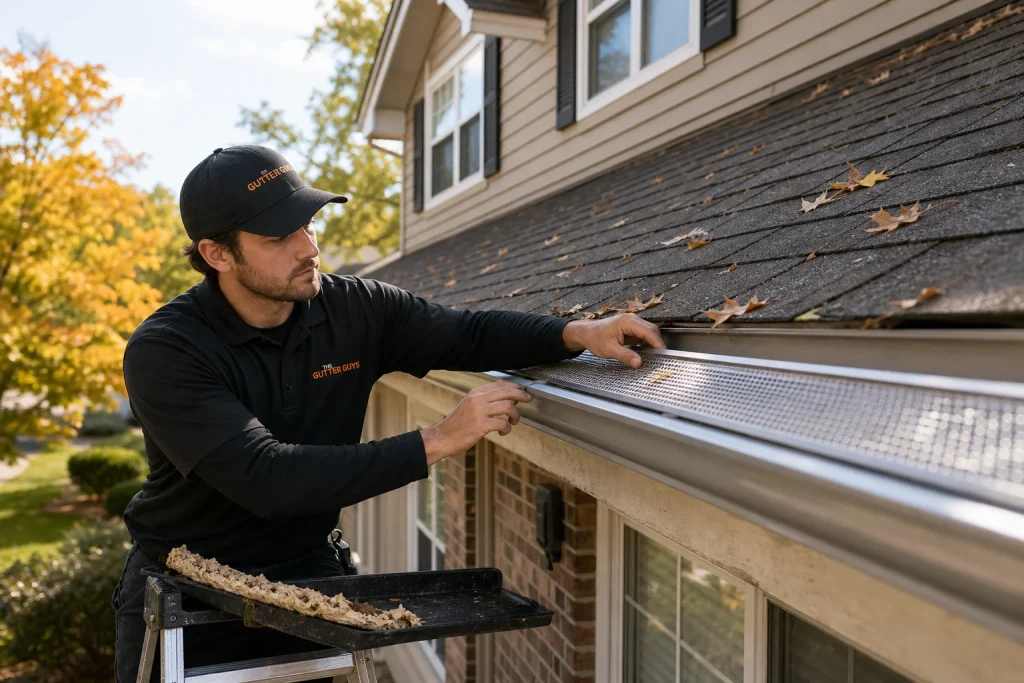
Foam gutter guards look like a budget fix, but they crumble, sag, and clog within a few seasons. When Midwest homeowners replace foam with professional gutter guards, they trade a temporary patch for a Gutter Guard Installation system built to handle heavy rain, fine debris, and years of freeze-thaw cycles without falling apart.
By The Gutter Guys Team, Gutter Installation Experts
Why Do Foam Gutter Guards Fail Over Time?
Foam gutter guards are inserts that sit inside the gutter channel and rely on open-cell material to let water through while blocking leaves on top. The problem is the material itself. Sun exposure breaks down the foam's cell structure within a couple of seasons, and once it turns brittle it starts crumbling into small pieces that fall down into the gutter and clog the downspout from the inside. Cold Midwest winters make this worse: water that soaks into the foam freezes and expands, cracking the material and pulling it out of shape.
Foam gutter guards also were never built to filter fine debris like pine needles, shingle grit, or seed pods. Those particles work their way into the foam's pores over time, and once the pores clog, water has nowhere to go but over the front edge of the gutter. What starts as an easy install often turns into a bigger cleanup project a year or two later, since the crumbled foam has to come out before any gutter cleaning can happen properly.
Warning Signs Your Foam Gutter Guards Need to Be Replaced
A few signs tend to show up before foam guards fail completely. Watch for:
- Sagging or gaps where the foam has shrunk away from the gutter's edge, leaving room for leaves to slip underneath.
- Water sheeting over the front of the gutter during heavy rain instead of draining through the downspout.
- Moss, grass, or small plants growing on top of the foam, a sign that trapped moisture and organic debris have been sitting there for a while.
- Loose foam crumbs in the downspout or splash block, which means the material is actively breaking apart.
- Ice buildup along the roofline in winter, since clogged guards trap water that refreezes overnight.
Any one of these on its own is worth a look. Two or three together usually mean the gutters are close to overflowing, and overflow left unchecked leads to water damage on fascia boards, siding, and even the foundation.
Are Mesh Gutter Guards Better Than Foam Gutter Guards?
For most homes, yes. Mesh gutter guards, especially stainless steel options, use a fine screen that sits over the gutter opening instead of stuffing material inside the channel, making them one of the more durable forms of Gutter Protection for Midwest homes. Water passes through the mesh openings while leaves, twigs, and most fine debris slide off the angled surface and onto the ground. Because the mesh never sits inside the gutter itself, there is nothing inside the channel to break down, crumble, or trap moisture the way foam does.
Micro mesh in particular is built to screen out shingle grit and seed pods, the same fine debris that clogs foam within a season or two. A stainless steel micro mesh surface holds its shape far longer than foam or plastic, and it will not rust or degrade under UV exposure the way open-cell foam does. Homeowners weighing mesh against other gutter guard options, like a simple brush insert or a reverse curve design that relies on surface tension technology, will find that neither breaks down into loose debris inside the gutter the way foam does.
Handling Heavy Rain and Fine Debris
Mesh consistently outperforms foam during heavy rain because the entire surface area of the screen stays open, allowing water flow to keep pace with the downpour instead of backing up. Foam guards restrict flow even when new, since water has to pass through the material itself rather than around it. Add a season of clogged pores and a foam guard barely lets water through at all, right when the gutters need to move the most volume.
What to Expect When You Replace Foam With Professional Gutter Guards
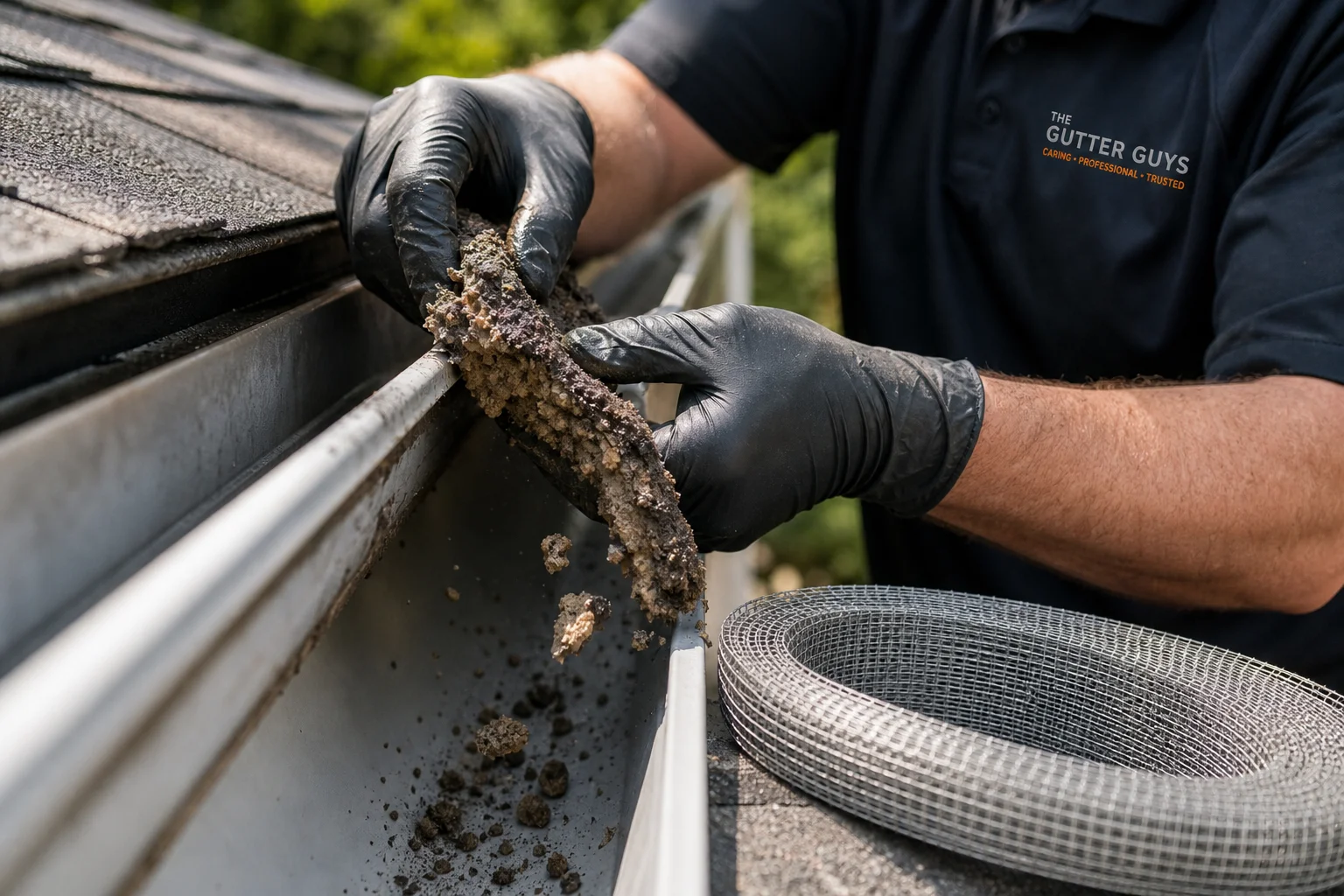
Homeowners who replace foam with professional gutter guards typically move through three stages: removal of the old material, gutter cleaning and inspection, and installation of the new mesh system.
Removing Old Foam Guards
Technicians pull the foam inserts out by hand, section by section, and bag the crumbled pieces so nothing falls into the downspout during the swap. Once the channel is clear, they flush the gutter and check the hangers, seams, and slope for any damage the trapped moisture may have caused underneath.
Installation Timeline
Most homes are done in a single day. The mesh sections are cut to fit the roofline and secured under the shingle line or clipped to the gutter's front lip, depending on the gutter's profile, so there is no drilling into the roof deck itself.
Cost Factors
Pricing depends on linear footage, roof pitch, gutter condition, and the mesh material chosen. A home with steep rooflines or gutters that require repair alongside the guard installation will run higher than a straightforward single-story swap. The most reliable way to get an accurate number is a walk-through estimate rather than a flat rate quoted over the phone.
Can Foam Gutter Guards Cause Roof or Gutter Damage?
Yes, in a few specific ways. Crumbled foam that migrates into the downspout can create a full blockage, and a blocked downspout sends water back up and over the gutter's edge every time it rains. That overflow runs down the fascia board, and prolonged exposure leads to rot and water damage that spreads to the roof deck if it goes unaddressed long enough.
Trapped moisture inside the foam itself is the other issue. Because the material holds water against the metal gutter rather than letting it drain freely, some homeowners see faster corrosion on aluminum gutters that had foam guards installed for several years. None of this means every foam installation causes damage, but the risk grows the longer worn-out foam stays in place.
How Long Do Mesh Gutter Guards Last Compared to Foam?
Foam gutter guards generally need replacing every two to five years, depending on sun exposure and climate. Stainless steel mesh systems are built for a much longer service life since the material does not degrade under UV light or break down from repeated freeze-thaw cycles the way foam does, helping homeowners keep clean gutters year-round with far less upkeep. A properly installed mesh gutter guard system still benefits from occasional maintenance, mainly a rinse-off or brush-clean if heavy debris builds up on the surface, but it will not need full replacement on the same cycle foam does.
Frequently Asked Questions
Is it worth replacing foam gutter guards with professional mesh guards?
For most homeowners dealing with recurring clogs, overflow, or crumbling foam, yes. Mesh systems cost more upfront than a foam insert, but they last significantly longer and reduce how often gutters need attention. Homes in wooded areas or those that see heavy rain regularly tend to see the fastest payoff.
Can I install mesh gutter guards myself, or do I need a professional?
A DIY mesh install is possible on a single-story home with straightforward gutters, but a professional install ensures the mesh is properly secured under the shingle line or clipped correctly, which affects how well it handles heavy rain and prevents debris entering the gutter over time.
Do mesh gutter guards still require any gutter cleaning maintenance?
Some maintenance is still recommended, though far less than with open gutters or foam guards. An occasional rinse or brush-off keeps fine debris from building up on the mesh surface, and most homeowners find this takes a fraction of the time a full gutter cleaning used to take.
What's the best gutter guard material for heavy rain and fine debris?
Stainless steel micro mesh is generally considered among the best gutter guards for homes that deal with both heavy rain and fine debris like pine needles or shingle grit, since the mesh openings are small enough to screen out debris while still allowing strong water flow.
Get Your Foam Gutter Guards Replaced the Right Way
Crumbling foam is not something to patch year after year. If you are ready to replace foam with professional gutter guards, our team can walk your roofline, check for hidden water damage, and give you a straightforward estimate. Contact us to schedule a look at your gutters.